
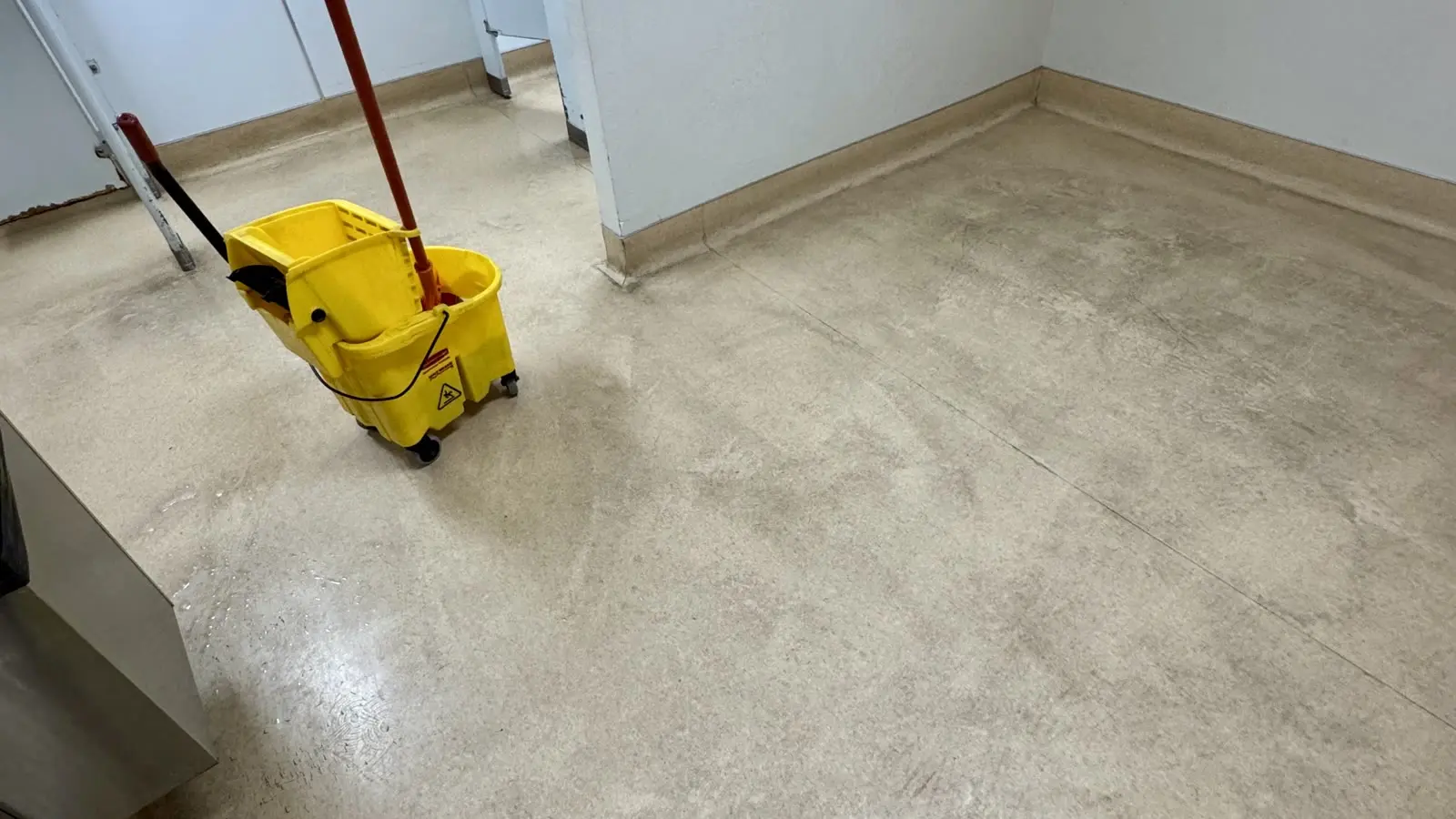
Floors, Tile & Dusting
How to Clean VCT Floors: A Maintenance Guide
To clean VCT floors, dust mop to remove grit, then damp mop with a properly diluted neutral cleaner and very little water. Burnish when the shine drops, scrub and recoat when burnishing stops working, and strip only when the finish fails.
A&G Facility Cleaning ServicesPublished Updated 6 min read
Key takeaways
- Daily VCT care is simple: remove loose grit first, then damp mop with a diluted neutral cleaner and no excess water.
- The shine on VCT comes from floor finish, not the tile, so most of your maintenance protects that finish.
- Armstrong Flooring says to avoid brown and black pads and stiff, highly abrasive brushes on its VCT.
- Walk-off mats at every entrance keep grit off the floor, but rubber or latex backed mats can permanently stain VCT.
- Each level of care, from burnishing to scrub and recoat, pushes back the day you need a full strip.
On this page
- What VCT is and why the finish matters
- Daily cleaning: dust mop, then damp mop with a neutral cleaner
- Spray buffing and burnishing to bring back the shine
- Scrub and recoat when burnishing stops working
- Stripping: the reset button
- What damages VCT, and how to avoid it
- Matting: the cheapest VCT protection you can buy
- Getting VCT floor care in Salinas and Monterey County
- VCT maintenance at a glance
- Questions people ask
What VCT is and why the finish matters
Vinyl composition tile, or VCT, is the hard 12 by 12 inch tile you see in school hallways, clinics, break rooms and stores. It is durable and cheap to replace, but it is meant to be protected by layers of floor finish, often called wax or polish. Almost every cleaning step is about keeping that finish clean and intact.
Armstrong Flooring's VCT maintenance instructions show how central the finish is. Right after installation, the maker calls for at least two coats of commercial floor polish to protect the tile until regular maintenance begins. Before the floor goes into full commercial use, it gets scrubbed and finished with 3 to 5 coats.
Those instructions also include timing rules for new floors that matter if you just had VCT put in:
- No rolling loads for at least 72 hours, so the adhesive can dry
- No wet washing, machine scrubbing or stripping for at least five days
After that, the routine is a ladder. Daily cleaning removes soil. Burnishing restores gloss. Scrub and recoat replaces worn top layers. Stripping starts over. The better you handle the lower steps, the less often you need the expensive ones.
RelatedFloor Stripping & Waxing in Salinas and Monterey CountyDaily cleaning: dust mop, then damp mop with a neutral cleaner
Daily VCT cleaning is two passes: dry, then damp. Grit is the main enemy, because every shoe that crosses loose sand grinds it into the finish like sandpaper.
- Dust mop, sweep or vacuum the whole floor to pick up loose dust and debris. Work along walls and under furniture, where soil collects.
- Mix your floor cleaner to the dilution on the label. Armstrong recommends a properly diluted cleaner and specifically warns against using an excessive amount of liquid.
- Wring the mop well. You want the floor damp, not wet. Standing water can work into seams and edges.
- Mop in sections, changing the solution when it turns gray. Dirty water just spreads soil around.
- Put out wet floor signs and keep people off until the floor is dry. OSHA's walking-working surfaces rule requires workroom floors to be kept clean and, as far as feasible, dry.
Use a neutral cleaner made for finished floors, since that is what the flooring maker's instructions are written around. Mix it to the label: using more cleaner than the label calls for does not clean better and can leave residue behind. If you use a disinfectant in restrooms or clinics, Armstrong says to follow the disinfectant maker's directions to avoid slippery conditions and possible discoloration.
RelatedNightly janitorial service that includes hard floor careSpray buffing and burnishing to bring back the shine
Burnishing restores gloss without adding much finish, and it is the cheapest way to keep VCT looking sharp. A high-speed machine spins a soft pad across the cleaned floor and heats the top of the finish, smoothing out fine scratches and scuffs.
Armstrong's guidance is clear on when this works: if there is a sufficient base of polish remaining, meaning 3 to 5 coats, you can buff, spray buff or burnish to restore the gloss. Spray buffing adds a light mist of restorer solution while buffing for a little extra repair.
How often depends on traffic. The University of Toledo's facilities team, for example, burnishes hard floors monthly. Busy entries and corridors may need it more often. Quiet offices may need it less.
Two rules for good results:
- Always clean the floor first. Burnishing over grit grinds the dirt into the finish.
- Use the pad the machine and finish makers recommend for burnishing. Aggressive pads cut the finish instead of polishing it.
When burnishing no longer brings the shine back, or you see dull gray paths where the finish is thin, it is time to move up a step.
RelatedOur janitorial service serviceScrub and recoat when burnishing stops working
A scrub and recoat removes the worn top layers of finish and adds fresh coats, without stripping the whole floor. It is the workhorse of a good VCT program.
Armstrong describes it this way: after sweeping or dust mopping, scrub with a rotary machine or auto scrubber running at 300 rpm or less and a properly diluted cleaner. Use a red pad for a light scrub or a blue pad for a deeper one. Pass slowly in each direction, rinse with clean water, let the floor dry, then apply more coats of polish as needed.
The point is to remove soil and scratched finish while leaving a sound base. Weber State University's custodial procedures, for example, refinish a scrubbed high-traffic area with two layers of finish. Writing in Cleaning and Maintenance Management, an ISSA publication, Richard Bodo noted that one to two coats are normally enough to restore gloss after a scrub.
Do it before the finish wears through. Once foot traffic reaches bare tile, the tile itself starts to scuff and stain, and only a full strip will even out the floor again.
RelatedWhen a scrub and recoat is enough, and when to stripStripping: the reset button
Stripping removes all of the finish so the floor can start clean. It is needed when the finish has yellowed, trapped dirt between layers, built up along walls, or worn through.
Armstrong's restorative steps are: mix stripper to the right dilution for the buildup, apply it liberally, let it dwell as long as the stripper maker recommends, keep it wet, scrub at 300 rpm or less with a blue pad, pick up the slurry with a wet vacuum or mop, rinse and dry, then apply 3 to 5 coats of polish. Stripper should never dry on the floor.
One warning for newer floors: Armstrong does not recommend aggressive mop-on and mop-off, no-scrub or no-rinse strippers on tile less than two years old, because they may affect the adhesive bond.
Stripping is labor, chemical and water intensive, and the floor is out of service until the new finish dries. That is why the daily, burnishing and recoat steps above are worth doing well.
RelatedProfessional VCT stripping and refinishingWhat damages VCT, and how to avoid it
Most VCT damage comes from grit, the wrong tools, too much water, and furniture. The table below sums up the common causes. A few deserve more detail.
- Abrasive pads and brushes. Armstrong tells users to avoid brown and black pads and stiff, highly abrasive brushes on its resilient floors. Those are stripping tools and they can scratch the tile.
- Excess water. Flooding the floor during mopping or scrubbing can get into seams and edges. Armstrong warns against excessive liquid in daily care and says not to flood the floor when scrubbing.
- Rubber and latex backed mats. Armstrong recommends mats without latex or rubber backing because those backings can cause permanent discoloration.
- Furniture and casters. Armstrong recommends felt glides on smooth floors, nylon glides on textured surfaces, double wheel casters, and a non-staining chair mat under rolling chairs.
- Construction and moves. Protect the floor with plywood or Kraft paper when moving equipment or during construction.
One more habit helps: clean spills right away. Sugary drinks and grease left overnight are harder to remove and can soften or stain the finish.
RelatedSchools in Salinas and Monterey CountyMatting: the cheapest VCT protection you can buy
Walk-off mats stop grit at the door, before it reaches the finish. Armstrong's instructions call for walk-off mats at every entrance and say to clean them regularly. A mat full of sand stops working and can even spread soil.
Good matting practice:
- Put a mat outside each entrance to catch coarse dirt and a second mat inside to catch fine grit and moisture.
- Make mats long enough that people take several steps on them, not one.
- Choose mats with backings the floor maker approves. On VCT, avoid latex and rubber backings.
- Vacuum mats daily in busy buildings and clean or swap them on a schedule.
- Lift and clean under mats, since grit collects there too.
In schools, a lot of soil comes in from playgrounds and fields. In clinics and offices, it comes in from parking lots. Either way, the less grit that crosses the threshold, the longer the finish lasts and the fewer strips you pay for.
RelatedSchool cleaning programs for busy hallways and classroomsGetting VCT floor care in Salinas and Monterey County
If your team handles daily mopping but needs help with burnishing, scrub and recoat, or a full strip, A&G Facility Cleaning Services provides floor care along with janitorial service for offices, schools, medical offices, warehouses, churches and government buildings in Salinas, Monterey, Seaside, Carmel-by-the-Sea, Carmel Valley, Hollister and Watsonville.
The company is licensed and insured and offers free estimates. Call (831) 208-1314 to set up a walkthrough of your floors.
RelatedCommercial cleaning for Monterey County facilitiesVCT maintenance at a glance
Each task protects the floor finish. Move to the next level only when the one before it no longer keeps the floor clean and glossy.
| Task | When | What it does |
|---|---|---|
| Dust mop or vacuum | Daily, before damp mopping | Removes grit that scratches the finish |
| Damp mop, neutral cleaner | Daily or as needed, per Armstrong | Removes soil without flooding seams |
| Clean walk-off mats | Regularly; daily in busy entries | Keeps mats able to trap grit |
| Spray buff or burnish | When gloss drops (monthly at the University of Toledo) | Restores shine on a sound base of 3 to 5 coats |
| Scrub and recoat | When burnishing no longer restores gloss | Removes worn top layers and adds fresh coats |
| Strip and refinish | When finish yellows, traps dirt or wears through | Removes all finish; 3 to 5 new coats |
Dust mop or vacuum
- When
- Daily, before damp mopping
- What it does
- Removes grit that scratches the finish
Damp mop, neutral cleaner
- When
- Daily or as needed, per Armstrong
- What it does
- Removes soil without flooding seams
Clean walk-off mats
- When
- Regularly; daily in busy entries
- What it does
- Keeps mats able to trap grit
Spray buff or burnish
- When
- When gloss drops (monthly at the University of Toledo)
- What it does
- Restores shine on a sound base of 3 to 5 coats
Scrub and recoat
- When
- When burnishing no longer restores gloss
- What it does
- Removes worn top layers and adds fresh coats
Strip and refinish
- When
- When finish yellows, traps dirt or wears through
- What it does
- Removes all finish; 3 to 5 new coats
Questions people ask
What is the best way to clean VCT tile?
Dust mop or vacuum first to remove grit, then damp mop with a properly diluted neutral floor cleaner, using as little water as possible. Change the solution when it gets dirty and keep people off until the floor dries. Burnish when the shine fades, and scrub and recoat when burnishing no longer works. Armstrong Flooring's VCT instructions follow this same order.
Can you steam clean VCT?
Armstrong Flooring's VCT maintenance instructions do not call for steam. They call for sweeping or dust mopping, then damp mopping with a properly diluted cleaner, and they warn against using an excessive amount of liquid. For deeper cleaning, they call for machine scrubbing at 300 rpm or less. Check your flooring and finish makers' instructions before trying any method they do not list.
Can I clean VCT floors with vinegar?
VCT makers write their care instructions around a properly diluted neutral floor cleaner. Armstrong Flooring, for example, names its own neutral cleaner for daily damp mopping. Vinegar is not part of those instructions. A cleaner made for finished resilient floors, mixed to the label dilution, is the safer choice because it is designed to clean without harming the floor finish.
What is VCT flooring?
VCT stands for vinyl composition tile. It is a hard, resilient tile, commonly 12 by 12 inches, used in schools, hospitals, stores, offices and break rooms. It is inexpensive and durable, and it is designed to be protected with layers of floor finish, often called wax or polish, which are burnished, recoated and periodically stripped and replaced.
Who cleans and refinishes VCT floors in Salinas?
A&G Facility Cleaning Services, at 161 Main St #3, Salinas, provides VCT burnishing, scrub and recoat, and full floor stripping and waxing for offices, schools, medical offices and other facilities across Monterey County. The company is licensed and insured and has more than 15 years in business. Estimates are free at (831) 208-1314.
Sources
We checked the facts in this guide against these sources.
- 1.Vinyl Composition Tile (VCT) Maintenance Instructions, Armstrong Flooring (AHF, LLC)
- 2.Floor Care, University of Toledo Facilities and Construction
- 3.Custodial Hard Floor Maintenance Procedures, Weber State University Facilities Management
- 4.Rethinking VCT Floor Maintenance, Cleaning and Maintenance Management (ISSA)
- 5.29 CFR 1910.22, Walking-working surfaces: general requirements, Occupational Safety and Health Administration
Keep reading
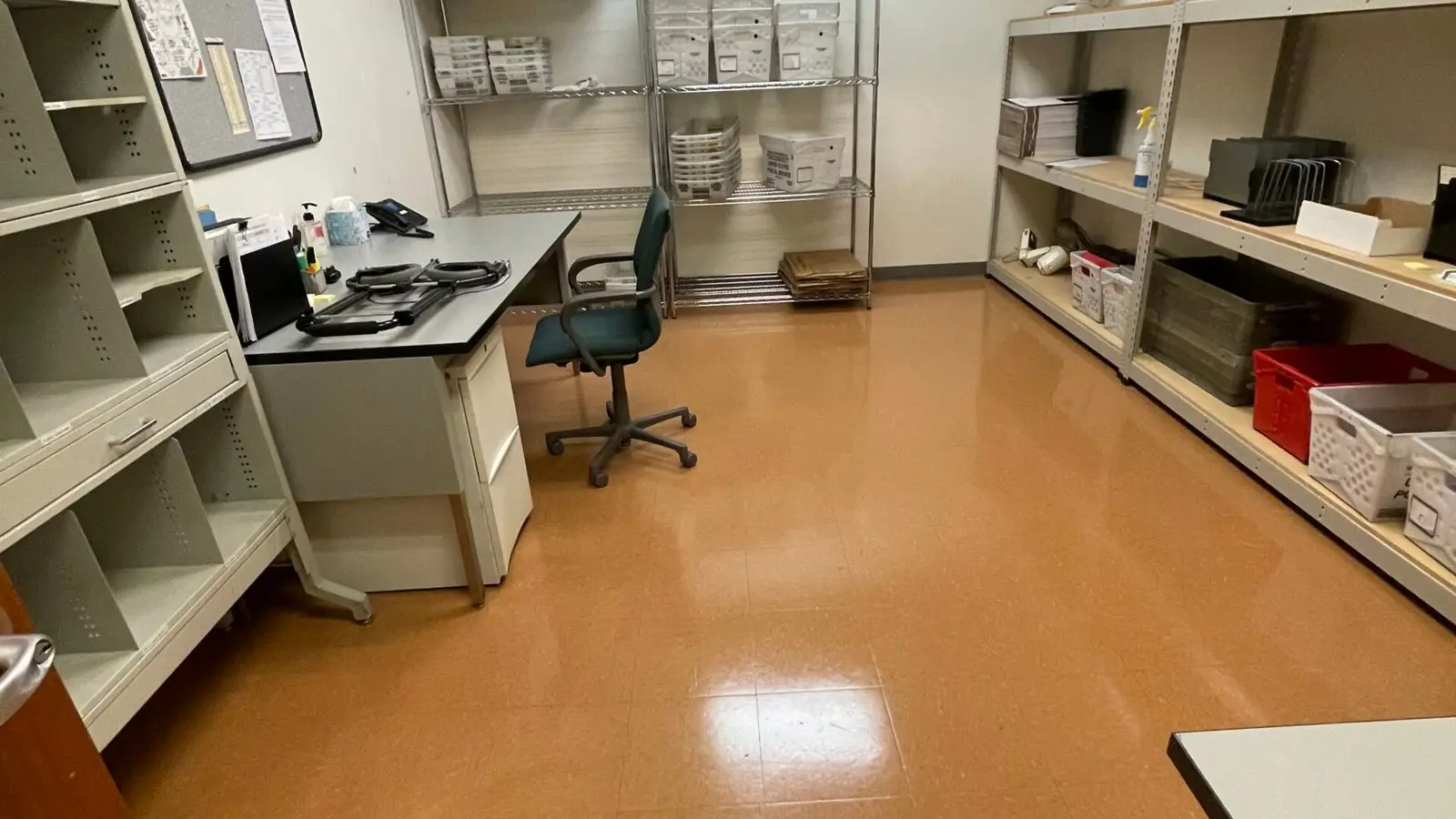 6 min read
Floors, Tile & Dusting
Floor Stripping and Waxing: The Process, How Often, and What It Costs
Floor stripping and waxing removes the old, dirty finish down to the bare tile, then lays down fresh coats of floor finish. Many floors only need a scrub and recoat. A full strip is for finish that is yellowed, built up, or worn through.
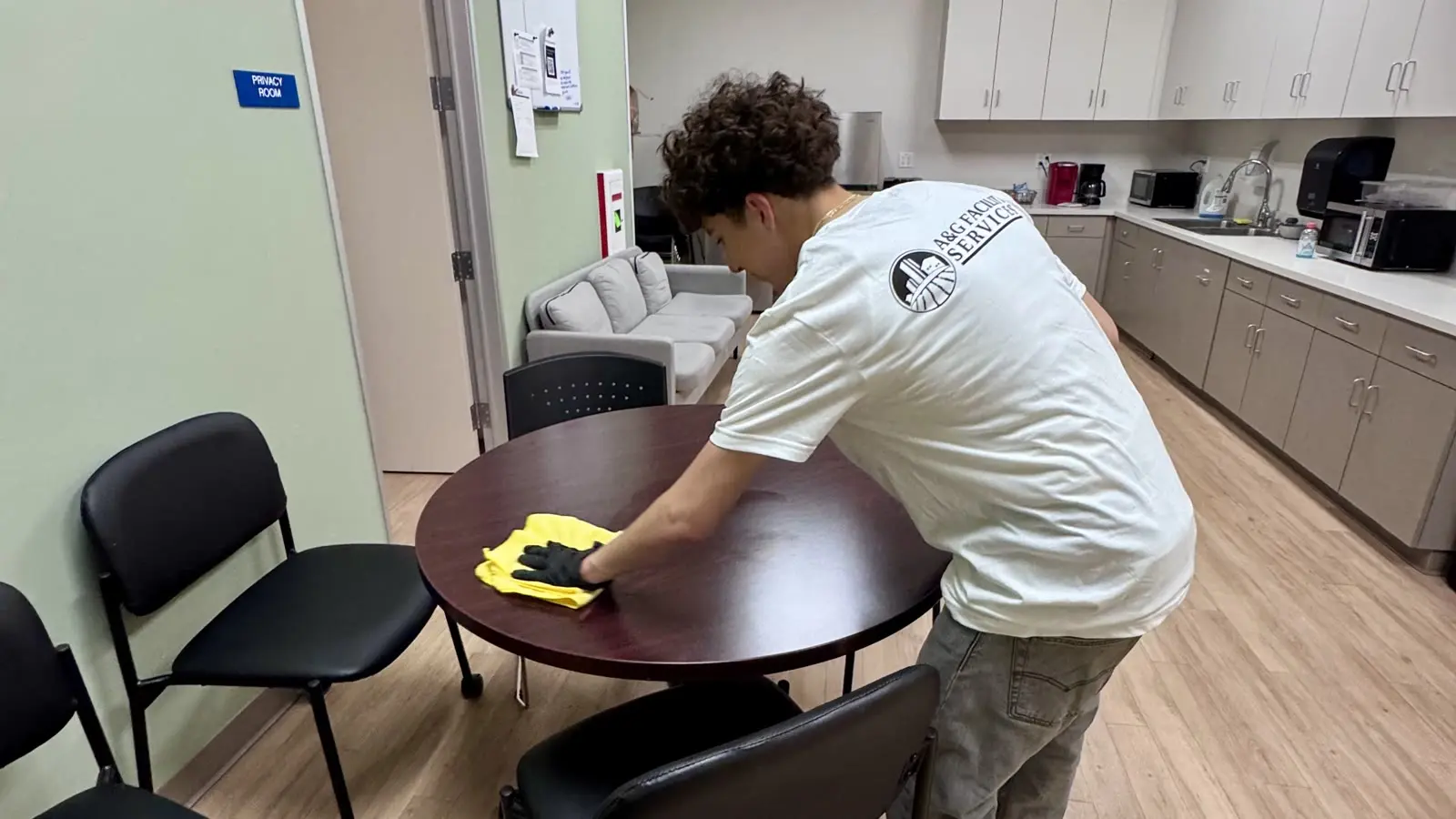 5 min read
Commercial Cleaning
Disinfecting vs Sanitizing vs Cleaning
Cleaning removes dirt and germs with soap or detergent. Sanitizing reduces the bacteria left after cleaning. Disinfecting uses an EPA-registered product to kill viruses and bacteria, but only if the surface stays wet for the full contact time on the label.
 5 min read
Commercial Cleaning
Medical Office Cleaning Checklist by Room
A medical office checklist covers exam rooms, the waiting room, front desk, restrooms and floors, with high-touch surfaces cleaned and disinfected more often than low-touch ones. Use EPA-registered disinfectants by the label, follow the OSHA bloodborne pathogens rules, and split tasks clearly between cleaners and clinical staff.
Need floor stripping & waxing in Monterey County?
Tell us about your property and we will send a free, no-obligation estimate.