
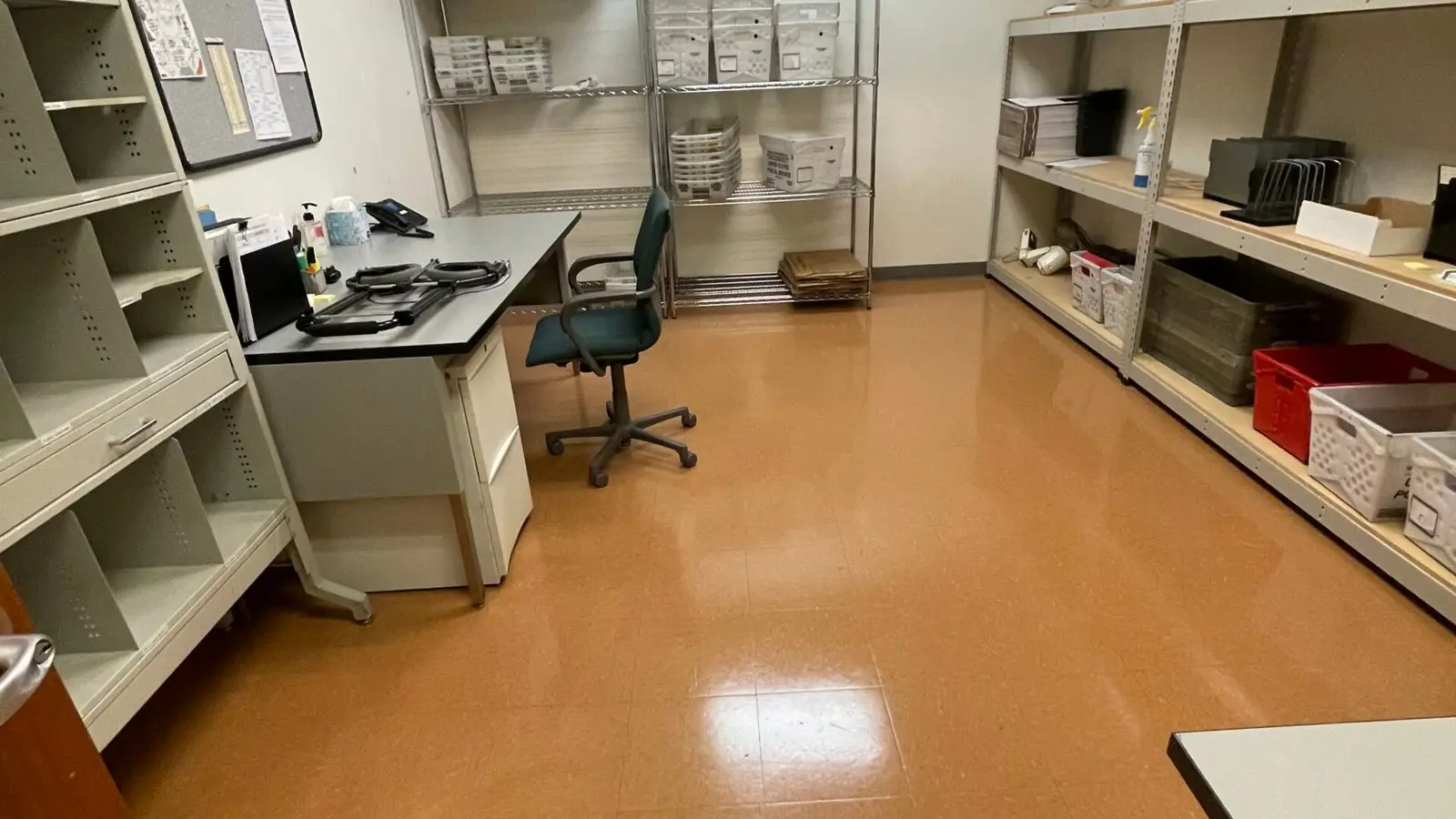
Floors, Tile & Dusting
Floor Stripping and Waxing: The Process, How Often, and What It Costs
Floor stripping and waxing removes the old, dirty finish down to the bare tile, then lays down fresh coats of floor finish. Many floors only need a scrub and recoat. A full strip is for finish that is yellowed, built up, or worn through.
A&G Facility Cleaning ServicesPublished Updated 6 min read
Key takeaways
- A full strip removes every layer of old finish, and the floor then gets 3 to 5 new coats, per Armstrong Flooring's VCT instructions.
- A scrub and recoat removes only the worn top layers and costs less, so it should be the routine fix.
- There is no single schedule: traffic, daily care and burnishing decide when a floor needs work.
- Light foot traffic can return about an hour after the last coat with some finishes, but heavy carts and furniture should wait 24 hours.
- Homewyse put basic strip and wax labor at $1.72 to $2.15 per square foot nationally in January 2026.
On this page
- What floor stripping and waxing actually does
- The stripping and refinishing process, step by step
- Scrub and recoat vs. full strip: pick the lighter fix first
- How often floors need stripping, by traffic level
- Cure time: when you can walk on a freshly waxed floor
- What drives the price of stripping and waxing
- Getting floor stripping and waxing in Salinas and Monterey County
- Scrub and recoat vs. full strip and refinish
- Questions people ask
What floor stripping and waxing actually does
Stripping and waxing replaces the protective film on a resilient floor, not the floor itself. On vinyl composition tile (VCT) and most commercial vinyl, the "wax" is really an acrylic floor finish, sometimes called polish. It takes the scuffs, grit and cart traffic so the tile underneath does not.
Over months, that film wears thin in walkways, traps dirt between layers, and can turn yellow or gray. Daily mopping and burnishing cannot fix dirt that is sealed inside the finish. At that point the only way to get a clean, even floor is to dissolve the old layers and start over.
The work suits:
- VCT in schools, clinics, break rooms and offices
- Sheet vinyl and some luxury vinyl tile, when the flooring maker allows a finish
- Rubber tile and other resilient floors rated for finish
It does not suit unsealed natural stone, polished concrete, hardwood, or ceramic and porcelain tile. Those surfaces need their own care methods, and an acrylic finish can cause problems on them.
RelatedFloor stripping and waxing for Salinas facilitiesThe stripping and refinishing process, step by step
A proper strip follows the flooring maker's steps, and Armstrong Flooring's VCT maintenance instructions lay them out clearly. The crew's job is to remove all of the old finish without flooding the floor or damaging the tile.
- Move furniture, block off the area and post wet floor signs.
- Sweep or dust mop to remove loose grit.
- Mix the stripper to the dilution the chemical maker gives for the amount of buildup.
- Apply it liberally with a mop and let it dwell for the time the stripper maker recommends. Keep it wet. Never let stripper dry on the floor.
- Scrub with a rotary machine or auto scrubber at 300 rpm or less, using a blue pad or equivalent, to break up the old film.
- Pick up the slurry with a wet vacuum or mop.
- Rinse with clean water and let the floor dry completely.
- Apply 3 to 5 thin coats of commercial floor finish, letting each coat dry before the next.
Armstrong also warns against brown and black pads and stiff, highly abrasive brushes on its resilient floors. On tile less than two years old, it does not recommend aggressive mop-on, no-scrub or no-rinse strippers because they may affect the adhesive bond.
Edges and corners take the most time. A machine cannot reach them, so they are hand scraped or scrubbed. That detail work is what separates a clean job from a floor with a dark ring along every wall.
RelatedFloor Stripping & Waxing in Salinas and Monterey CountyScrub and recoat vs. full strip: pick the lighter fix first
A scrub and recoat is the right call whenever the bottom layers of finish are still sound. Writing in Cleaning and Maintenance Management, an ISSA publication, Richard Bodo noted that floor finish is typically built up in four to six layers, and that most chemical stripping jobs remove finish that is in perfectly good shape. Traffic usually damages only the top few layers.
In a scrub and recoat, the crew scrubs with a cleaner instead of a stripper. Armstrong's instructions call for a red pad for a light scrub and a blue pad for a deeper one, then a rinse and more coats of finish. The same CMM article says one to two coats are normally enough to restore gloss. Weber State University's custodial procedures follow the same idea: scrub the high-traffic finish, then refinish with two layers.
Choose a full strip when:
- The finish has turned yellow or gray and scrubbing does not brighten it
- Dirt is trapped between layers, especially along walls and under desks
- The finish is worn through to bare tile in walkways
- Buildup is so thick it powders, chips or looks cloudy
The table below compares the two side by side.
RelatedDaily VCT care that stretches the time between stripsHow often floors need stripping, by traffic level
No standard sets one stripping interval for every building. The University of Toledo's facilities team, for example, burnishes hard floors monthly and strips and refinishes only as needed. Weber State leaves refinishing to each area supervisor based on how the building is used. That is the right approach: watch the floor, not the calendar.
A practical way to plan by traffic:
- Entrances, lobbies and main corridors take the most grit. Expect frequent burnishing and the most scrub and recoat cycles. These areas usually reach a full strip first.
- Classrooms, exam rooms and break rooms get steady use and spills. They often go longer between strips if mats and daily mopping are good.
- Private offices and storage rooms see light traffic. Many can go a long time on burnishing and occasional recoats alone.
Schools often schedule full strips during summer or winter break, when rooms can sit empty while finish cures. Medical offices usually work after hours or on weekends so patient areas stay open. Either way, the less often you strip, the less chemical, water and labor you pay for.
Good daily care is the biggest lever. Walk-off mats at every entrance, daily dust mopping, and damp mopping with a neutral cleaner keep grit from grinding down the finish.
RelatedSchool cleaning built around break schedulesCure time: when you can walk on a freshly waxed floor
Light foot traffic can usually return within an hour or so of the last coat, but heavy use should wait about a day. Exact times depend on the product, so always read its data sheet. As one example, the data sheet for Excelsior GF-950, a gloss acrylic finish for VCT and other resilient floors, lists:
- Recoat time: more than 30 minutes between coats
- Light foot traffic: 1 hour after the final coat
- Heavy foot traffic and furniture: 24 hours
That data sheet also says not to dry the finish with fans or air movers, because forced air can affect finish quality. It calls for soft casters, felt or rubber protectors on furniture legs, and moving heavy items on a dolly instead of dragging them across new finish.
Two more points matter during the job. First, OSHA's walking-working surfaces rule requires workroom floors to be kept clean and, as far as feasible, dry, so signs and barriers stay up until the floor is dry. Second, a coat applied over one that is still soft will stay tacky and can turn cloudy. Patience between coats is what produces a hard, clear shine.
RelatedAfter-hours floor care for medical and dental officesWhat drives the price of stripping and waxing
Price is set mainly by square footage and by how much old finish has to come off. Homewyse's national estimate for January 2026 puts basic strip and wax labor at $1.72 to $2.15 per square foot, assuming favorable site conditions. Homewyse notes that its range excludes repairs to the floor and other extras, and that it is not a substitute for local written quotes.
The main cost drivers:
- Square footage. Large open areas go faster per foot than many small rooms.
- Buildup. Thick, old layers need longer dwell time, more stripper and more passes.
- Furniture and equipment. Desks, shelving and exam tables have to be moved and replaced.
- Edges, corners and cove base. Hand detailing adds labor.
- Number of coats. Five coats cost more than three, but last longer in busy areas.
- Scheduling. Nights, weekends and tight windows can raise labor cost.
- Floor condition. Broken tiles, adhesive bleed or old damage need repair first.
The cheapest long-term plan is usually a mix: good daily care, regular burnishing, scrub and recoat when gloss fades, and a full strip only when the finish truly fails.
RelatedOur schools serviceGetting floor stripping and waxing in Salinas and Monterey County
A&G Facility Cleaning Services strips and refinishes resilient floors for offices, schools, medical offices, government buildings, churches and warehouses in Salinas, Monterey, Seaside, Carmel-by-the-Sea, Carmel Valley, Hollister and Watsonville. The company is licensed and insured, rated 5.0 on Google, and has more than 15 years in business.
Before any quote, it helps to walk the floor and decide together whether it needs a full strip or only a scrub and recoat. Estimates are free. Call (831) 208-1314 or stop by the office at 161 Main St #3, Salinas.
RelatedRequest a free floor care estimateScrub and recoat vs. full strip and refinish
Both restore shine. The difference is how much of the old finish comes off and how much time, chemical and labor the job takes.
| Factor | Scrub and recoat | Full strip and refinish |
|---|---|---|
| What comes off | Only the worn, dirty top layers of finish | All old finish, down to bare tile |
| Chemical used | Floor cleaner | Floor stripper |
| Pad (Armstrong VCT guidance) | Red pad for a light scrub, blue for a deeper one | Blue pad or equivalent with stripping solution |
| New coats applied | Usually 1 to 2 | 3 to 5 |
| When to choose it | Gloss is dull, but the base layers are intact and clean | Finish is yellowed, worn through, or has dirt trapped in it |
| Downtime and cost | Shorter job, lower cost | Longer job, more labor and chemical |
What comes off
- Scrub and recoat
- Only the worn, dirty top layers of finish
- Full strip and refinish
- All old finish, down to bare tile
Chemical used
- Scrub and recoat
- Floor cleaner
- Full strip and refinish
- Floor stripper
Pad (Armstrong VCT guidance)
- Scrub and recoat
- Red pad for a light scrub, blue for a deeper one
- Full strip and refinish
- Blue pad or equivalent with stripping solution
New coats applied
- Scrub and recoat
- Usually 1 to 2
- Full strip and refinish
- 3 to 5
When to choose it
- Scrub and recoat
- Gloss is dull, but the base layers are intact and clean
- Full strip and refinish
- Finish is yellowed, worn through, or has dirt trapped in it
Downtime and cost
- Scrub and recoat
- Shorter job, lower cost
- Full strip and refinish
- Longer job, more labor and chemical
Questions people ask
How much does it cost to have a floor stripped and waxed?
Homewyse's national estimate for January 2026 is $1.72 to $2.15 per square foot for basic strip and wax labor under favorable conditions. The final price depends on square footage, how much old finish has built up, furniture moving, hand detailing at edges, the number of coats and after-hours scheduling. A scrub and recoat costs less because it removes only the top layers.
How do you strip the wax off a floor?
Apply a properly diluted floor stripper with a mop, let it dwell for the time the maker recommends, and keep it wet. Scrub with a machine at 300 rpm or less using a blue pad, then pick up the slurry with a wet vacuum, rinse with clean water and let the floor dry. Armstrong Flooring recommends 3 to 5 new coats of finish afterward.
How long after waxing can you walk on the floor?
It depends on the finish, so check its data sheet. As an example, the GF-950 acrylic finish data sheet allows light foot traffic 1 hour after the final coat and asks for 24 hours before heavy foot traffic or putting furniture back. Do not use fans to speed drying, and keep wet floor signs up until the floor is fully dry.
What are the downsides of using floor wax?
Floor finish needs upkeep. It must be burnished, scrubbed and recoated, and eventually stripped, which takes chemical, water and downtime. Layers can trap dirt and yellow over time if the floor is not cleaned well before each recoat. It also only belongs on floors rated for it, such as VCT; it is not meant for natural stone, hardwood or polished concrete.
Who does floor stripping and waxing in Salinas, CA?
A&G Facility Cleaning Services, based at 161 Main St #3, Salinas, strips and refinishes resilient floors for offices, schools, medical offices and other facilities across Monterey County, including Monterey, Seaside, Carmel, Hollister and Watsonville. The company is licensed and insured and offers free estimates. Call (831) 208-1314 to schedule a walkthrough.
Sources
We checked the facts in this guide against these sources.
- 1.Vinyl Composition Tile (VCT) Maintenance Instructions, Armstrong Flooring (AHF, LLC)
- 2.Rethinking VCT Floor Maintenance, Cleaning and Maintenance Management (ISSA)
- 3.GF-950 Gloss Acrylic Floor Finish data sheet, Excelsior Products (Roppe)
- 4.Cost to Strip and Wax Floor, Homewyse
- 5.Custodial Hard Floor Maintenance Procedures, Weber State University Facilities Management
- 6.Floor Care, University of Toledo Facilities and Construction
- 7.29 CFR 1910.22, Walking-working surfaces: general requirements, Occupational Safety and Health Administration
Keep reading
 6 min read
Floors, Tile & Dusting
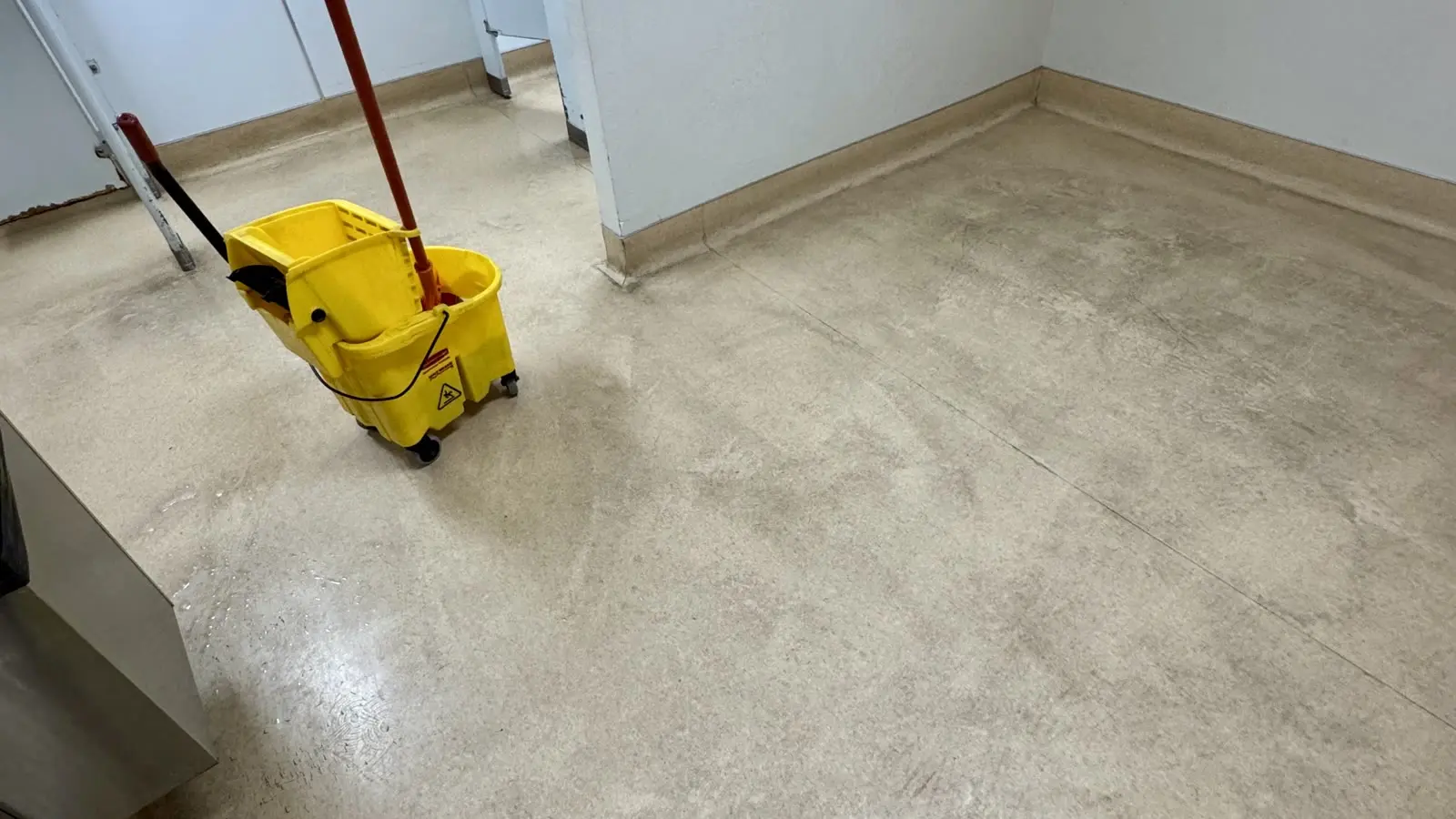
How to Clean VCT Floors: A Maintenance Guide
To clean VCT floors, dust mop to remove grit, then damp mop with a properly diluted neutral cleaner and very little water. Burnish when the shine drops, scrub and recoat when burnishing stops working, and strip only when the finish fails.
 5 min read
Commercial Cleaning
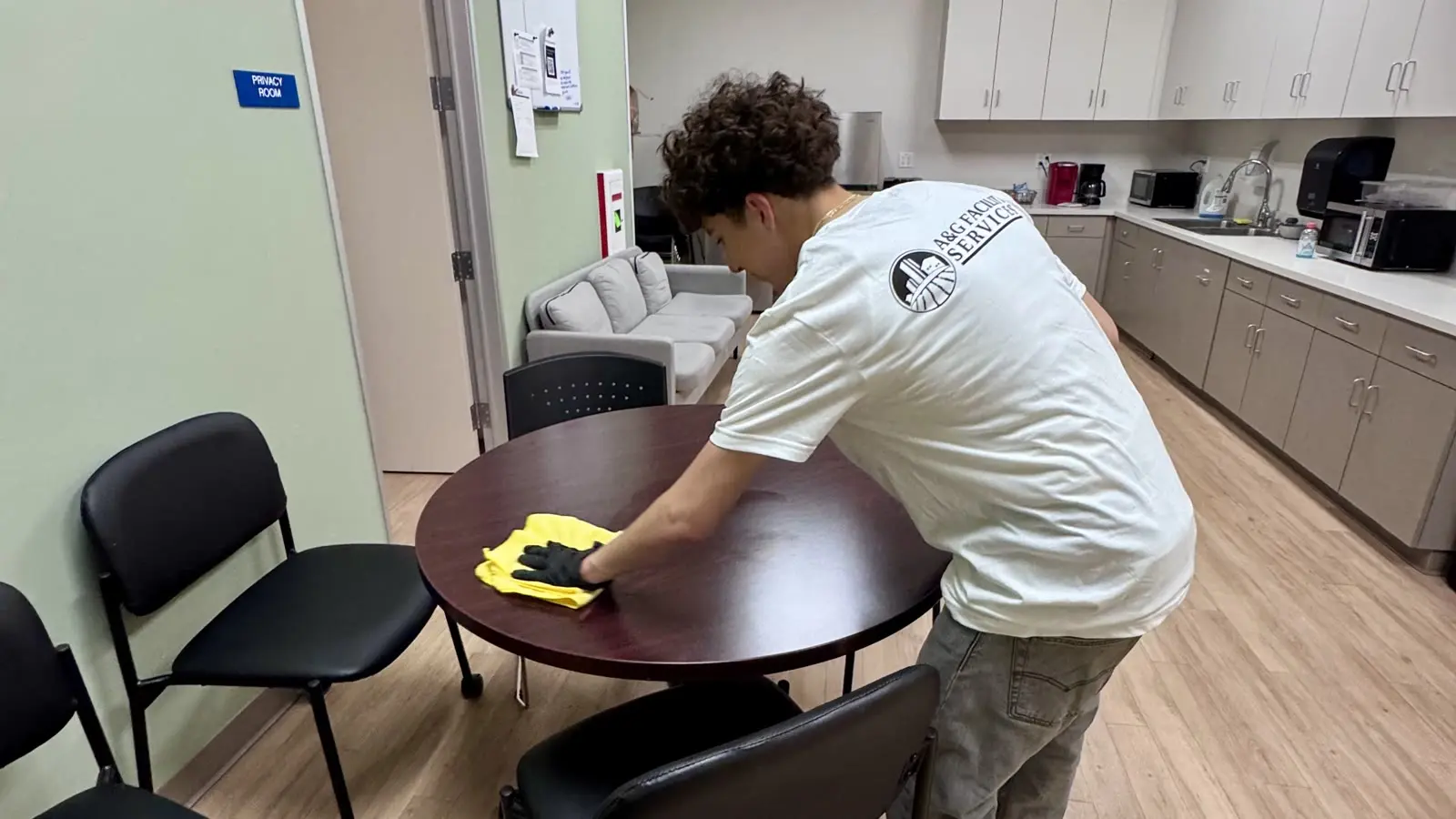
Disinfecting vs Sanitizing vs Cleaning
Cleaning removes dirt and germs with soap or detergent. Sanitizing reduces the bacteria left after cleaning. Disinfecting uses an EPA-registered product to kill viruses and bacteria, but only if the surface stays wet for the full contact time on the label.
 5 min read
Commercial Cleaning
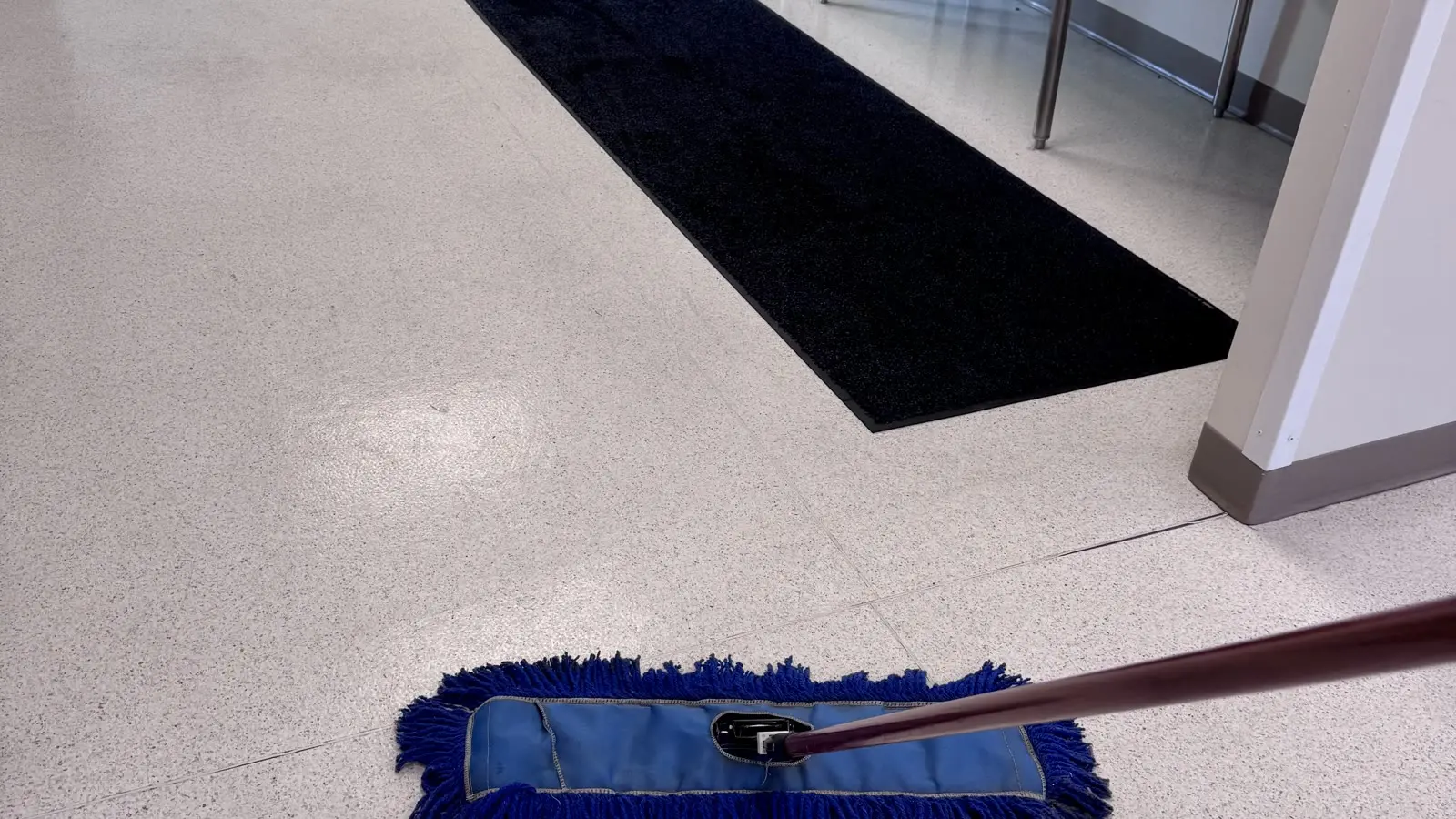
Medical Office Cleaning Checklist by Room
A medical office checklist covers exam rooms, the waiting room, front desk, restrooms and floors, with high-touch surfaces cleaned and disinfected more often than low-touch ones. Use EPA-registered disinfectants by the label, follow the OSHA bloodborne pathogens rules, and split tasks clearly between cleaners and clinical staff.
Need floor stripping & waxing in Monterey County?
Tell us about your property and we will send a free, no-obligation estimate.