
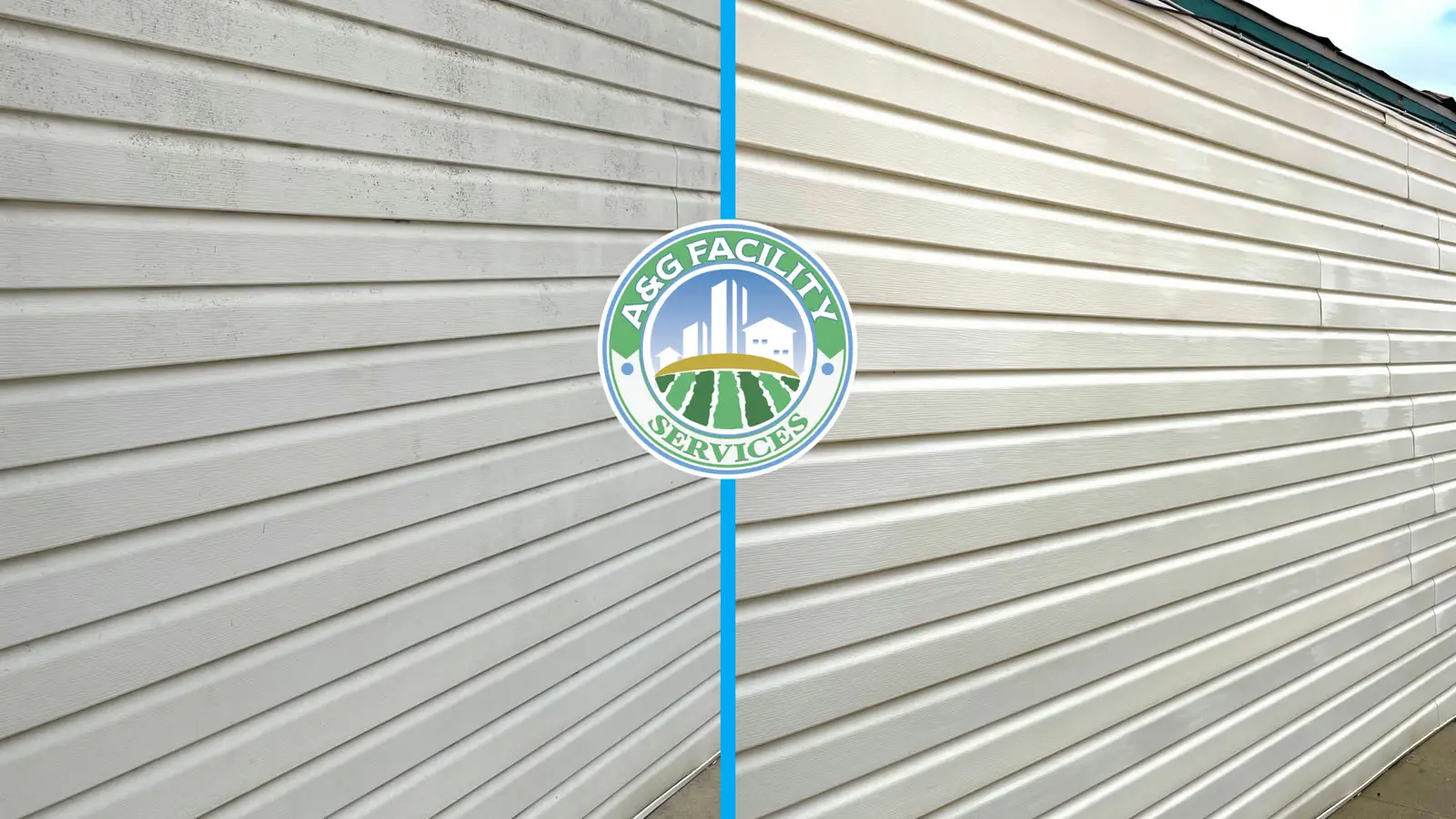
Pressure & Soft Washing
What Is Soft Washing? How It Works and Lasts
Soft washing is an exterior cleaning method that uses a low-pressure spray, a cleaning solution and a set dwell time instead of water force. The solution, usually diluted sodium hypochlorite, kills algae and mildew so a gentle rinse can carry them away.
A&G Facility Cleaning ServicesPublished Updated 5 min read
Key takeaways
- Soft washing works in three steps: apply a solution at low pressure, let it dwell, then rinse gently.
- It is built to treat organic growth such as algae, mildew and moss, plus everyday dirt and pollen.
- It does not remove rust, oil, efflorescence or hard water spots; those need other cleaners.
- Results last longer when the conditions that feed growth, like shade and sprinkler overspray, are fixed.
- Plants get pre-wet, protected and rinsed, and pets stay inside until surfaces are rinsed and dry.
On this page
- Soft washing in one paragraph
- How it works: apply, dwell, rinse
- What is in a soft wash solution
- What soft washing removes, and what it does not
- How long results last, and why
- Plant and pet safety
- Can you soft wash yourself?
- Soft washing in Carmel Valley, Salinas and the Monterey Peninsula
- What soft washing handles and what needs another method
- Questions people ask
Soft washing in one paragraph
Soft washing is a way to clean roofs, walls and other exterior surfaces with chemistry instead of force. A technician sprays a cleaning solution at low pressure, gives it time to work, and rinses it off with a gentle stream. The pressure is in the range of a garden hose, not a pressure washer.
It exists because many building materials cannot take high pressure. Asphalt shingles lose granules, stucco gets etched, and water gets driven behind siding panels. Soft washing gets those surfaces clean without the damage. It is also the better tool for organic growth, because it treats the growth instead of just knocking off the top layer.
Common soft wash jobs include:
- Asphalt shingle and tile roofs with dark streaks or moss.
- Stucco walls with gray or green staining on the shaded side.
- Vinyl, fiber cement and painted wood siding.
- Eaves, soffits and fascia boards.
- Commercial facades, signs and awnings where a strong stream would do damage.
Concrete and pavers can be soft washed for algae too, but they usually also get a pressure wash for ground-in dirt.
RelatedOur soft washing service for homes and businessesHow it works: apply, dwell, rinse
Every soft wash follows the same three steps, and the middle one does most of the work.
- Apply. The solution goes on at low pressure, usually from the bottom of a wall up so it does not streak, or across a roof in even passes. On porous surfaces, pre-wetting first helps. Sika's stucco care guide says pre-wetting keeps the stucco from absorbing dirty wash water.
- Dwell. The solution sits long enough to break down growth and loosen dirt. For asphalt shingle roofs, the Asphalt Roofing Manufacturers Association (ARMA) recommends at least 15 minutes and no more than 20.
- Rinse. A low-pressure rinse carries the residue away. ARMA says to rinse thoroughly and not to let the solution dry completely, because that may prevent a full rinse.
The mix is adjusted to the surface and how heavy the growth is. Stronger is not better. Too strong a mix wastes product and puts plants at risk.
RelatedSoft Washing in Salinas and Monterey CountyWhat is in a soft wash solution
The active ingredient in most soft wash mixes is sodium hypochlorite, the same chemical in household bleach, diluted with water. ARMA's roof cleaning guidance calls for a 50:50 mix of laundry-strength liquid chlorine bleach and water. Sika recommends a mild solution of household bleach for mildew on stucco.
Contractors often add a surfactant, a soap-like ingredient that helps the solution cling to vertical surfaces and spread evenly, so it stays on the wall long enough to work.
Because bleach is reactive, mixing matters. The CDC says never to mix household bleach with any other cleaners or disinfectants, because that can release vapors that may be very dangerous to breathe. Professionals mix only products meant to go together, and wear gloves and eye protection. ARMA likewise calls for appropriate protective equipment when working with chlorine bleach.
RelatedOur pressure washing serviceWhat soft washing removes, and what it does not
Soft washing is built for organic growth and general grime. It removes:
- Algae, including the dark streaks on roofs. ARMA says Gloeocapsa magma is probably the most common of several algae species behind roof discoloration.
- Mildew, the gray, black or green spotting on shaded walls. James Hardie notes that mildew discoloration can look like dirt.
- Moss, which matters on roofs because ARMA says it can lift or curl the leading edges of shingles.
- Dirt, dust, pollen, cobwebs and bird droppings.
It does not remove:
- Rust stains from sprinklers or metal fixtures.
- Oil and grease, which need a degreaser and often hot water on concrete.
- Efflorescence, the white powdery bloom on masonry. Sika suggests white vinegar, rinsed off before it dries.
- Hard water spots on glass.
A good contractor will tell you up front which stains need a separate treatment.
RelatedPressure washing for oil, gum and concrete stainsHow long results last, and why
Soft wash results usually outlast a plain rinse, but they are not permanent. ARMA says the effect of a bleach treatment on roofs is temporary. Growth comes back wherever its conditions stay in place.
Moisture is the main driver. James Hardie calls moisture the most important single factor in mildew growth, notes that mildew can lie dormant for years, and says it is usually found in damp, dark areas or during long humid stretches. ARMA links roof algae to warm, humid regions and notes that overhanging branches add shade and drop debris that holds moisture.
You can stretch the time between washes:
- Trim branches so more sun reaches the roof and walls.
- Point sprinklers away from walls. Sika warns that overspray can cause mildew and efflorescence on stucco.
- Clear gutters so water does not sheet down the siding.
- Ask about algae-resistant shingles when it is time to reroof.
On the Central Coast, north walls and fog-shaded roofs need attention first.
RelatedHow soft washing compares with pressure washingPlant and pet safety
Soft washing is safe for landscaping when the crew protects it, and the steps are simple. Extension horticulturists answering on Ask Extension note that chlorine bleach can be harmful to landscape plants, and give this advice:
- Wet the foliage first, which helps dilute any solution that lands on it.
- Do not let the solution dry on plants. Rinse it off right away.
- Cover plants with plastic sheeting if needed, but watch for sun. Sheeting in direct sun can magnify heat and burn leaves.
A careful crew also rinses plants again after the job, controls overspray on windy days, and keeps runoff away from vegetable beds and ponds.
For pets and kids:
- Keep them indoors until the surfaces and lawn have been rinsed and have dried.
- Bring in water bowls, toys and pet beds before work starts.
- Close windows and doors near the work area.
Can you soft wash yourself?
You can wash a small, ground-level area with a pump sprayer, a garden hose and a mild solution, following the product label and the siding maker's instructions. James Hardie, for example, recommends a soft cloth or soft brush, a garden hose and a labeled mildew cleaner for mildew on its siding.
The jobs worth handing off are roofs, second-story walls and large commercial facades. ARMA recommends professionals for roof cleaning, warns that the bleach solution makes a roof slippery, and says to work from a ladder or walkboards. Add the need for a controlled mix, plant protection and wash water that stays out of storm drains, and a pro is the safer choice for anything above head height.
RelatedWhat a professional roof soft wash involvesSoft washing in Carmel Valley, Salinas and the Monterey Peninsula
Soft washing fits the Central Coast well. Stucco is common, coastal fog keeps some walls and roofs damp, and oak and pine canopy in places like Carmel Valley adds shade and debris.
A&G Facility Cleaning Services provides soft washing for homes and commercial buildings in Carmel Valley, Salinas, Monterey, Carmel-by-the-Sea, Seaside, Hollister and Watsonville. The company is licensed and insured, has more than 15 years in business, and offers free estimates. Call (831) 208-1314 to have a technician look at the surfaces and growth you want treated.
RelatedCleaning services in Carmel ValleyWhat soft washing handles and what needs another method
A quick guide to common exterior stains and the treatment each one needs.
| Problem | Does soft washing fix it? | What works |
|---|---|---|
| Black roof streaks (algae) | Yes | Bleach solution, 15 to 20 minute dwell, low-pressure rinse |
| Mildew on shaded walls | Yes | Mild bleach solution or labeled mildew cleaner |
| Moss on roofs | Yes, with care | Solution plus gentle removal; no scrubbing on shingles |
| Dirt, pollen, cobwebs | Yes | Mild solution and rinse |
| Oil and grease on concrete | No | Degreaser and often hot-water pressure washing |
| Rust stains | No | A rust remover made for the surface |
| Efflorescence on masonry | No | White vinegar, rinsed before it dries |
Black roof streaks (algae)
- Does soft washing fix it?
- Yes
- What works
- Bleach solution, 15 to 20 minute dwell, low-pressure rinse
Mildew on shaded walls
- Does soft washing fix it?
- Yes
- What works
- Mild bleach solution or labeled mildew cleaner
Moss on roofs
- Does soft washing fix it?
- Yes, with care
- What works
- Solution plus gentle removal; no scrubbing on shingles
Dirt, pollen, cobwebs
- Does soft washing fix it?
- Yes
- What works
- Mild solution and rinse
Oil and grease on concrete
- Does soft washing fix it?
- No
- What works
- Degreaser and often hot-water pressure washing
Rust stains
- Does soft washing fix it?
- No
- What works
- A rust remover made for the surface
Efflorescence on masonry
- Does soft washing fix it?
- No
- What works
- White vinegar, rinsed before it dries
Questions people ask
What is a soft wash in power washing?
A soft wash is a low-pressure method where a cleaning solution, usually diluted sodium hypochlorite, does the cleaning instead of water force. The solution is sprayed on, left to dwell, then rinsed with a gentle stream. It is used on roofs, stucco and siding that high pressure can damage, and it treats algae and mildew rather than just knocking off the surface layer.
How many PSI is considered a soft wash?
There is no official cutoff. Soft washing runs at low pressure, roughly what a garden hose delivers, because the solution does the work. Manufacturer guidance reflects this: the Asphalt Roofing Manufacturers Association calls for a low-pressure rinse after treating shingles and says never to use a pressure washer on them, and James Hardie recommends low-pressure spray for its siding.
Do you rinse the roof after soft washing?
Yes. The Asphalt Roofing Manufacturers Association says to let the bleach solution dwell for 15 to 20 minutes, then rinse thoroughly with low-pressure water. It also warns not to let the solution dry completely, because that may prevent complete rinsing. Rinsing makes the roof slippery, which is one reason ARMA recommends using professionals for roof cleaning.
How often should a house be soft washed?
Wash again when growth starts to return, which depends on shade and moisture more than the calendar. James Hardie calls moisture the most important factor in mildew growth, so damp, shaded walls need it sooner than sunny ones. Trimming branches, pointing sprinklers away from walls and keeping gutters clear all stretch the time between washes.
Is soft washing safe for plants and pets?
It is when the crew takes simple precautions. Extension horticulturists advise wetting plant foliage first, rinsing off any solution before it dries, and covering plants with plastic only if they are out of direct sun. Keep pets and children indoors until the surfaces and lawn have been rinsed and are dry, and bring in water bowls and toys before work begins.
Who offers soft washing in Carmel Valley and Salinas?
A&G Facility Cleaning Services, at 161 Main St #3 in Salinas, offers soft washing and pressure washing in Carmel Valley, Salinas, Monterey, Carmel-by-the-Sea, Seaside, Hollister and Watsonville. The company is licensed and insured, has more than 15 years in business and is rated 5.0 on Google. Free estimates are available at (831) 208-1314.
Sources
We checked the facts in this guide against these sources.
- 1.Algae Discoloration, Asphalt Roofing Manufacturers Association
- 2.Algae, Moss Prevention and Cleaning of Asphalt Roofing Systems, Asphalt Roofing Manufacturers Association
- 3.Power Washing a house using bleach?, Ask Extension (Maryland Home and Garden Information Center)
- 4.Cleaning and Disinfecting with Bleach, Centers for Disease Control and Prevention
- 5.Cleaning James Hardie Primed and ColorPlus Technology Siding, Technical Bulletin 20, James Hardie Building Products
- 6.SikaWall Stucco Care and Maintenance Guide, Sika USA
Keep reading
 5 min read
Pressure & Soft Washing
Soft Washing vs Pressure Washing: Which to Use
Soft washing cleans with a low-pressure rinse and a cleaning solution that does the work, so it suits roofs, stucco and painted siding. Pressure washing cleans with force, so it suits concrete, pavers and other hard, uncoated surfaces.
 5 min read
Pressure & Soft Washing
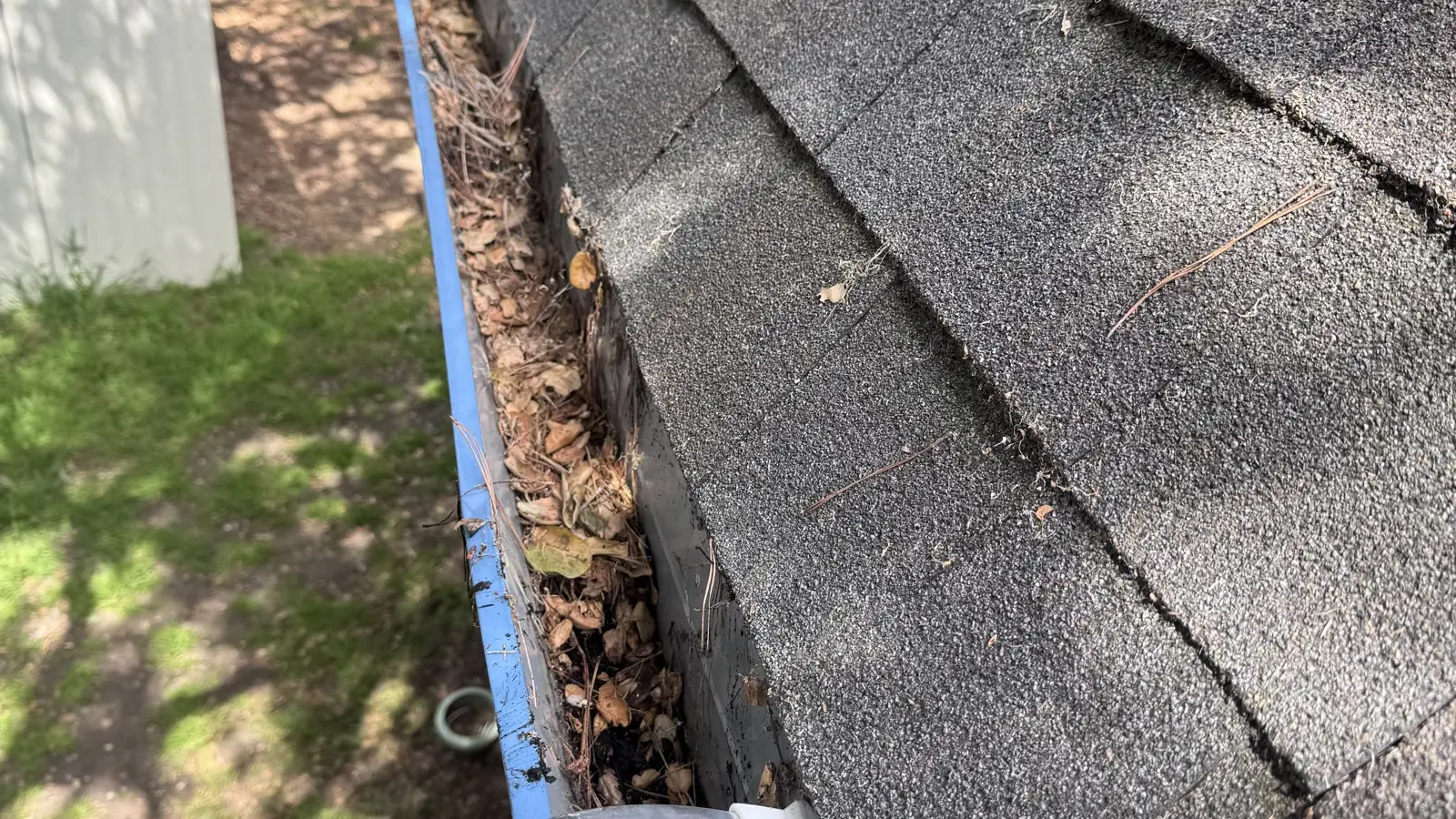
Roof Soft Wash: Remove Black Streaks Safely
A roof soft wash applies a diluted bleach solution at low pressure, lets it dwell for 15 to 20 minutes, and rinses it off gently. The roofing industry recommends it because pressure washing strips the granules that protect asphalt shingles.
 6 min read
Local Guides & Checklists
Pressure Washing in Carmel Valley: A Local Guide for Homeowners
Carmel Valley is warmer and sunnier than the coast, with almost no summer rain, so late spring and early fall are ideal for exterior cleaning. Oak pollen and leaf stains, hillside driveways, stucco and wood homes, and Monterey Peninsula water-waste rules all shape how the job should be done.
Need soft washing in Monterey County?
Tell us about your property and we will send a free, no-obligation estimate.