
Carpet & Upholstery
The Professional Carpet Cleaning Process, Step by Step
A professional carpet cleaning follows eight steps: inspect, vacuum out dry soil, pre-spray, agitate and let it dwell, rinse with hot water extraction, treat remaining spots, groom the pile, and dry it fast with airflow. Each step exists because skipping it leaves soil, residue or moisture behind.
A&G Facility Cleaning ServicesPublished Updated 5 min read
Key takeaways
- Most soil in carpet is dry grit, so thorough vacuuming before any water touches the carpet does much of the work.
- Chemistry, heat, agitation and time work together; if one is reduced, the others have to make up for it.
- The hot water rinse should remove the pre-spray along with the soil, because leftover detergent attracts new dirt.
- Grooming and fast drying are part of the job, not extras. Slow drying causes wicking and odors.
- A carpet that looks dirty again within weeks usually points to residue, not to the carpet itself.
On this page
- Step 1: Inspection before anything gets wet
- Step 2: Dry soil removal
- Steps 3 and 4: Pre-spray, agitation and dwell time
- Step 5: The hot water extraction rinse
- Step 6: Spotting what the rinse left
- Steps 7 and 8: Grooming and drying
- How to tell the process was done right
- Getting help in Salinas and Monterey County
- The eight steps at a glance
- Questions people ask
Step 1: Inspection before anything gets wet
A good cleaning starts with a walk-through, not with the wand. The technician checks the fiber, the construction, the traffic lanes, the spots and any damage that is already there.
This step sets expectations. The IICRC, which writes the ANSI/IICRC S100 standard for carpet and rug cleaning, notes in its consumer tip sheet that cleaning can reveal problems the soil was hiding. Old pet urine can permanently change dye color and weaken fibers, and those areas often look more obvious after cleaning. Spots treated with household oxygen bleach spotters can turn yellow or pink once the soil comes off. Neither is caused by the cleaning, but you want to hear about them before the job, not after.
The inspection also decides the chemistry. Wool and other natural fibers react differently than synthetics; the IICRC, for example, warns that peroxide spotters should not be used on wool without testing for color loss. The technician should also ask what spot cleaners you have been using.
RelatedHow our carpet cleaning service handles inspection and spottingStep 2: Dry soil removal
Thorough vacuuming comes before any liquid, because most soil in carpet is dry particles. Shaw's consumer care guide describes that grit as hard, sharp particles that wear the pile like sandpaper when left in place.
Water turns dry soil into mud that sinks toward the backing, so removing it dry is easier and faster. A 2019 article in the trade magazine Facility Cleaning Decisions makes the same point from the drying side: dry soil left in the carpet means more wet passes, and more wet passes mean longer drying. It recommends vacuuming and using a pile lifter before cleaning, especially in commercial spaces where sand and grit pack into the base of the yarn.
Shaw's commercial checklist puts it in three words: always pre-vacuum. If a company skips this to save time, the rest of the process has to work harder and usually leaves more behind.
RelatedCarpet Cleaning in Salinas and Monterey CountySteps 3 and 4: Pre-spray, agitation and dwell time
The pre-spray loosens oily and sticky soil so the rinse can carry it away. It is applied evenly, worked into the pile, and left to act for a few minutes.
The S100 standard describes soil suspension with four elements: chemical activity, temperature, agitation and time. A 2021 article in Cleaning and Maintenance Management summarizing the standard explains that if one of the four is reduced, the others have to increase. Cold water needs more chemistry or more time; a gentle product needs more agitation.
Shaw's commercial maintenance guidance gives specifics for its products: use a pre-spray certified in the Carpet and Rug Institute Seal of Approval program with a pH between 6 and 8, agitate with a mechanical brush, and allow about 10 minutes of dwell time. Agitation matters most in traffic lanes, where soil is ground deep into the yarn. A pre-spray that is sprayed on and immediately extracted does far less than one that has been brushed in and given time.
RelatedOur upholstery cleaning serviceStep 5: The hot water extraction rinse
Hot water extraction injects heated water into the pile and immediately vacuums it back out, along with the loosened soil and the pre-spray. This is the step most people call steam cleaning.
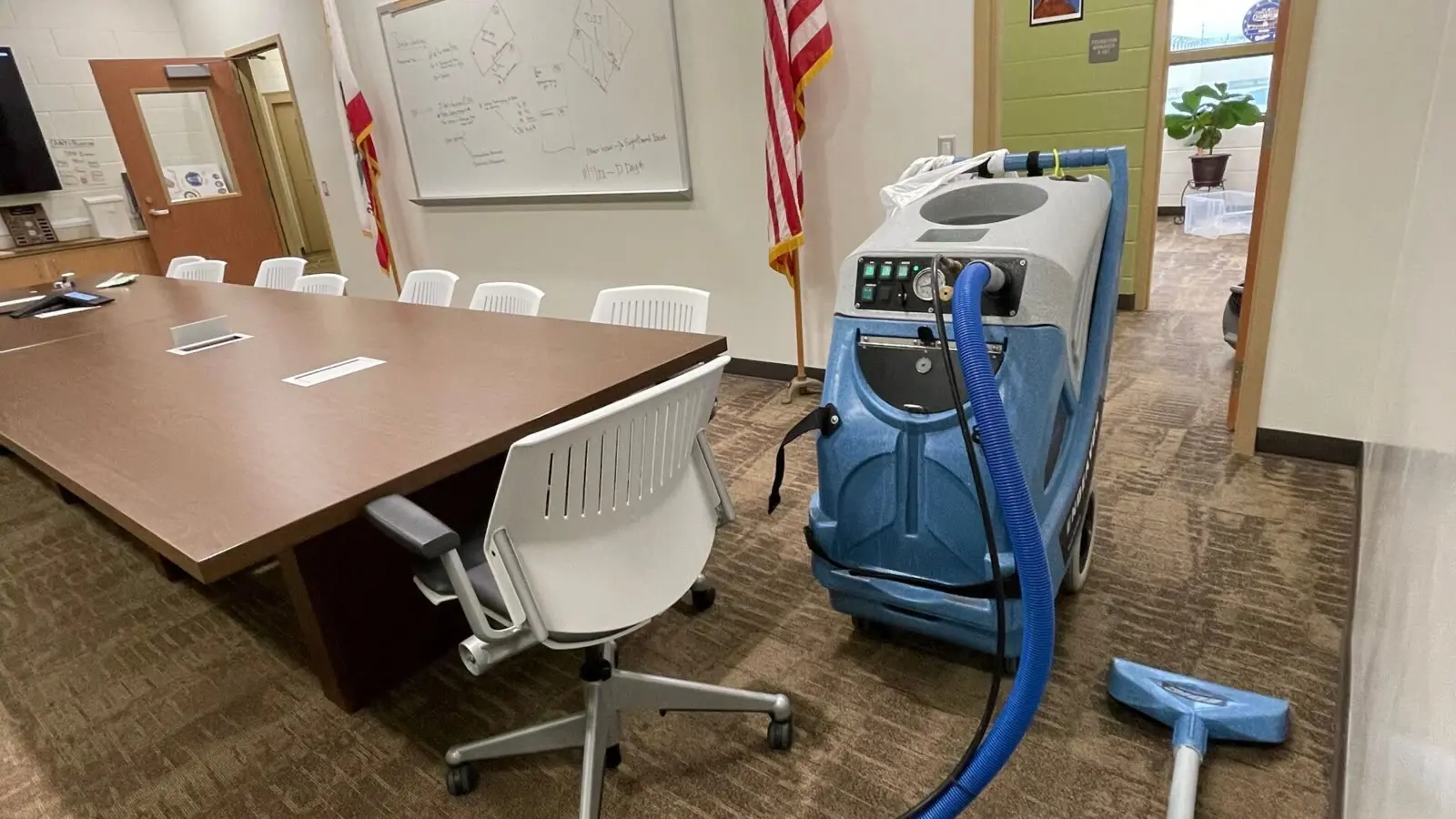
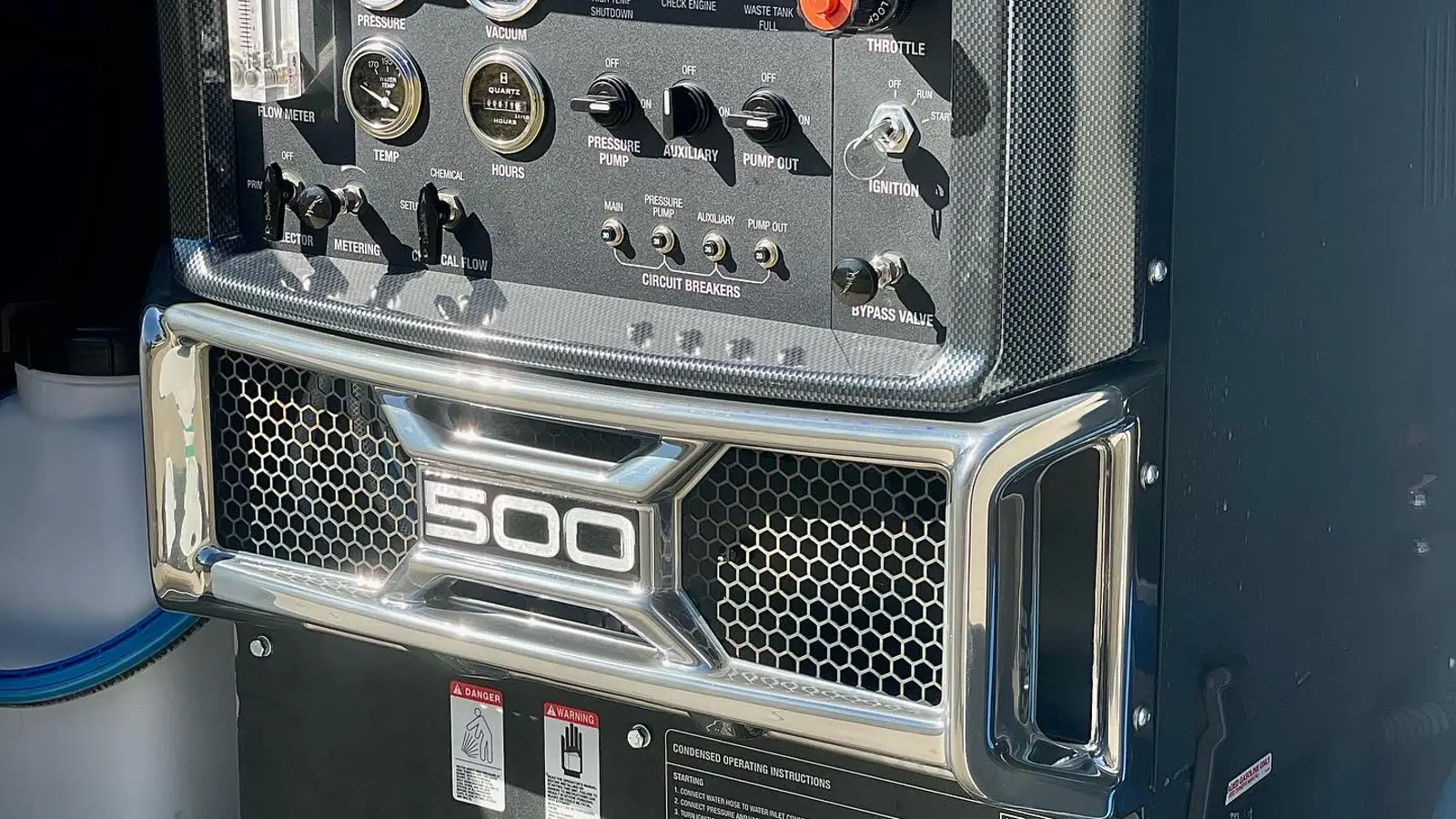
Shaw recommends only hot water extraction for overall cleaning of its residential carpet, using products and equipment certified through the Carpet and Rug Institute's Seal of Approval program. Its commercial guidance adds that truck-mounted units maintain higher pressure and temperature, that portable box-and-wand units should deliver at least 200 psi and roughly one gallon of water per minute, and that machines that recycle dirty water should not be used.
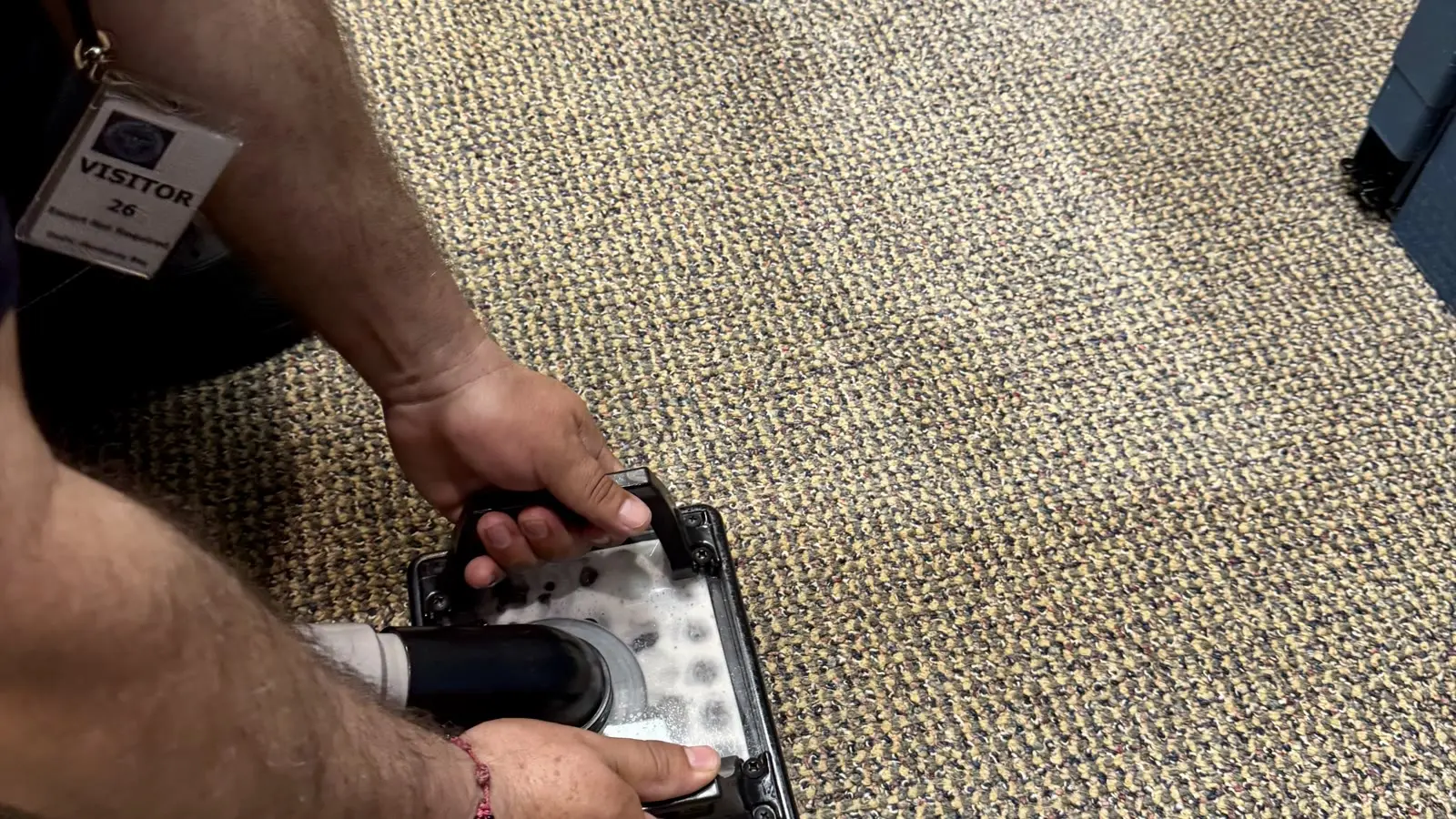
The rinse is where residue is won or lost. The goal is to leave the carpet with as little detergent as possible, which is why Shaw's commercial checklist calls for extracting with hot water or a low pH rinse agent rather than more soap. Slow, overlapping wand strokes with extra dry passes pull out more water, and every bit of water removed here shortens drying later.
RelatedTruck-mounted vs portable extraction explainedStep 6: Spotting what the rinse left
After the main rinse, the technician goes back to the spots that did not come out. Spotting after extraction lets the technician see what is truly left instead of guessing through soil.
The IICRC tip sheet explains why some spots behave differently. Red food dyes, some medicines and certain drinks are chemically close to carpet dye, so they bond like dye does. Acne products with benzoyl peroxide bleach the fiber when hot water activates them, and only color repair fixes that. Chlorine bleach marks also need dyeing or patching. A good technician will tell you which spots are stains that can be removed and which are color loss that cleaning cannot reverse.
This is also the step for pet urine. Technicians use a UV light to find spots that do not show, and the IICRC notes that treated areas can still glow under UV after cleaning without meaning the urine is still there.
RelatedOur carpet stain removal guideSteps 7 and 8: Grooming and drying
Grooming sets the pile in one direction while it is still damp, and drying gets the moisture out before it causes trouble. Both finish the job.
A pile rake or lifter stands crushed yarn back up and gives the carpet an even look as it dries. Shaw's commercial guidance notes that pile lifting helps restore surface yarns and remove embedded grit. On cut pile, grooming also reduces the light and dark patches people mistake for leftover dirt.
For drying, Shaw advises air movers to speed drying and prevent wicking, and keeping the building HVAC on during cleaning and for at least 12 hours afterward. The 2019 Facility Cleaning Decisions article says properly done hot water extraction should leave carpet dry in four to six hours, and that carpet still damp or musty after 24 hours signals a problem.
RelatedWhat affects carpet drying timeHow to tell the process was done right
The real test comes a few weeks later. A carpet that stays clean was rinsed well; a carpet that looks dirty again quickly was not.
The IICRC lists the common causes of rapid re-soiling: detergent left in the carpet by poor rinsing or do-it-yourself spotting, oily soil from feet and pets, outdoor contaminants such as blacktop, and carpet put back into use before it was dry. Spots that reappear within a few days are usually wicking from deep in the backing, which the IICRC says can be fixed with a return visit or gentle blotting.
Keep the invoice. Shaw's warranty guidance asks owners to show proof of periodic hot water extraction cleaning when filing a claim, and its maintenance record asks for the date, the company, the method and the products used. Upholstery follows the same logic of soil removal and rinsing, with gentler settings.
RelatedProfessional upholstery cleaningGetting help in Salinas and Monterey County
If you want to see these steps done on your own floors, ask any company to walk you through its process before you book. A&G Facility Cleaning Services in Salinas cleans carpet with truck-mounted steam extraction and eco-friendly products for homes and businesses from Salinas to Monterey, Carmel, Seaside, Hollister and Watsonville. Free estimates are available at (831) 208-1314.
RelatedGet a free estimate for carpet cleaningThe eight steps at a glance
What happens at each stage of a professional hot water extraction cleaning, and what goes wrong when it is skipped.
| Step | What happens | If it is skipped |
|---|---|---|
| 1. Inspection | Fiber, condition, spots and existing damage are checked | Wrong chemistry or heat; surprises about permanent stains |
| 2. Dry soil removal | Thorough vacuuming, sometimes a pile lifter | Grit turns to mud, more wet passes, longer drying |
| 3. Pre-spray | Cleaning agent applied evenly to loosen soil | Oily soil stays bonded to the fiber |
| 4. Agitation and dwell | Brushed in and left a few minutes to work | Traffic lanes stay gray |
| 5. Hot water rinse | Heated water injected and vacuumed out | Detergent residue and fast re-soiling |
| 6. Spotting | Remaining spots treated by type | Spots left that could have come out |
| 7. Grooming | Pile set in one direction while damp | Uneven look and crushed lanes |
| 8. Drying | Air movers and HVAC running | Wicking, odors and slip risk |
1. Inspection
- What happens
- Fiber, condition, spots and existing damage are checked
- If it is skipped
- Wrong chemistry or heat; surprises about permanent stains
2. Dry soil removal
- What happens
- Thorough vacuuming, sometimes a pile lifter
- If it is skipped
- Grit turns to mud, more wet passes, longer drying
3. Pre-spray
- What happens
- Cleaning agent applied evenly to loosen soil
- If it is skipped
- Oily soil stays bonded to the fiber
4. Agitation and dwell
- What happens
- Brushed in and left a few minutes to work
- If it is skipped
- Traffic lanes stay gray
5. Hot water rinse
- What happens
- Heated water injected and vacuumed out
- If it is skipped
- Detergent residue and fast re-soiling
6. Spotting
- What happens
- Remaining spots treated by type
- If it is skipped
- Spots left that could have come out
7. Grooming
- What happens
- Pile set in one direction while damp
- If it is skipped
- Uneven look and crushed lanes
8. Drying
- What happens
- Air movers and HVAC running
- If it is skipped
- Wicking, odors and slip risk
Questions people ask
What are the steps in professional carpet cleaning?
A professional hot water extraction cleaning usually has eight steps: inspection, dry soil removal by vacuuming, pre-spray, agitation with dwell time, a hot water rinse and extraction, spot treatment, grooming the pile, and drying with air movers and the HVAC running. Each step removes a different kind of soil or prevents a later problem such as residue, wicking or slow drying.
Where does the dirt go when you steam clean a carpet?
In hot water extraction, the loosened soil, the cleaning solution and the rinse water are vacuumed out of the carpet through the wand and hose into a recovery tank. With a truck-mounted system that tank is in the service van, not in your building. Shaw's commercial guidance advises against machines that recycle that dirty water back onto the carpet.
Will steam cleaning ruin my carpet?
Done correctly, no. Shaw recommends hot water extraction as the cleaning method for its residential carpet and asks for proof of it for warranty claims. Problems come from over-wetting, too much detergent or slow drying. The IICRC lists over-wetting as one cause of rippling, and leftover detergent as a cause of rapid re-soiling, so choose a company that rinses well and dries fast.
How long do you have to stay off carpet after steam cleaning?
Stay off it until it feels dry, which is usually a few hours. A 2019 trade article in Facility Cleaning Decisions says properly done hot water extraction should leave carpet dry in four to six hours. Keep furniture off it until it is dry, run fans or the HVAC, and avoid walking from damp carpet onto hard floors, which can be slippery.
Why does my carpet look dirtier after cleaning?
The IICRC names two usual reasons. Wicking is soil or a stain deep in the backing that rises to the tips as the carpet dries, often within a few days. Rapid re-soiling happens when detergent or spotter residue is left behind and attracts new dirt. Better rinsing, faster drying and a return visit to blot or re-rinse the area usually fix both.
Sources
We checked the facts in this guide against these sources.
- 1.Consumer Floor and Furnishings Care Information (Carpet Topics tip sheet), IICRC
- 2.ANSI/IICRC S100 Standard for Professional Cleaning of Textile Floor Coverings, IICRC
- 3.Complete Your Floor Maintenance Program With Extraction, Cleaning and Maintenance Management (CMM)
- 4.Carpet Maintenance Guidelines (printed carpet), Shaw Contract
- 5.Carpet Care and Maintenance, Shaw Floors
- 6.Protect Carpets With Proper Dry Times, Facility Cleaning Decisions (CleanLink)
- 7.Carpet Maintenance Checklist (commercial), Shaw Industries
Keep reading
 5 min read
Carpet & Upholstery
Carpet Stain Removal Guide: Coffee, Wine, Pets, Ink
Act fast, scrape off solids, blot with a white towel from the outside in, and try plain warm water before any cleaner. Water-based spills like coffee and wine get a mild detergent solution; grease and ink need a solvent on a towel. Rinse out every cleaner and dry the spot under weighted towels.
 5 min read
Carpet & Upholstery
Truck-Mounted vs Portable Carpet Cleaning
Both truck-mounted and portable machines clean by hot water extraction. Truck-mounted units sit in the van and deliver hotter water and stronger suction, so they clean faster and leave less water behind. Portables go where hoses cannot: upper floors, secure buildings and sites with no truck access.
 5 min read
Carpet & Upholstery
How Long Does Carpet Take to Dry After Cleaning?
Carpet cleaned by hot water extraction usually dries in about four to six hours when the job is done well and air keeps moving, according to a 2019 facility cleaning trade article. Low-moisture methods dry in under an hour. Carpet still damp or musty after 24 hours points to a problem.
Need carpet cleaning in Monterey County?
Tell us about your property and we will send a free, no-obligation estimate.