
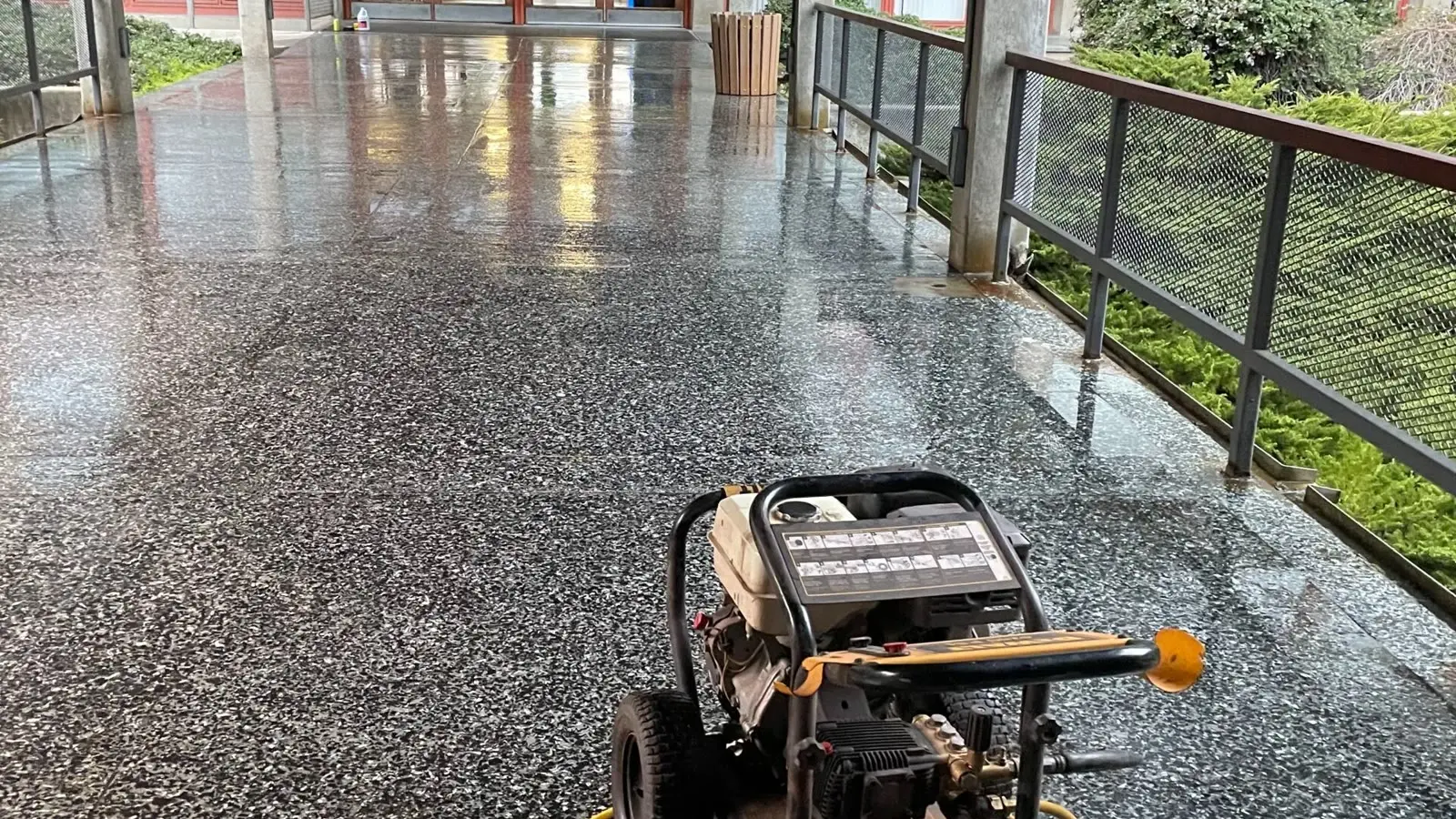
Pressure & Soft Washing
Pressure Washing Guide: PSI, Hot Water and Safety
Pressure washing uses a pump to push water through a narrow nozzle at high pressure, measured in PSI, at a set flow, measured in GPM. It is right for concrete and hard surfaces, but roofs and many sidings need low pressure, and wash water must stay out of storm drains.
A&G Facility Cleaning ServicesPublished Updated 5 min read
Key takeaways
- PSI is the force of the water and GPM is the volume; both decide how fast a surface gets clean.
- Hot water breaks down oil and grease faster than cold water, which matters on driveways, docks and dumpster pads.
- Asphalt shingle roofs should never be pressure washed, and siding makers set low pressure limits.
- High-pressure spray can cause injection wounds that look minor at first and need prompt medical care.
- In Salinas and across California, wash water must not go into the storm drain.
On this page
- What pressure washing is
- PSI and GPM: the two numbers that matter
- Hot water vs cold water
- Which surfaces take which method
- What not to pressure wash
- Pressure washer safety
- Wash water rules in California
- Getting pressure washing done right on the Central Coast
- Which cleaning method fits which surface
- Questions people ask
What pressure washing is
Pressure washing is cleaning with water that a pump forces through a small nozzle so it leaves at high pressure. The force knocks dirt, mud, algae, gum and loose paint off a surface. Add a cleaning solution, heat, or a rotating surface cleaner, and the same basic machine handles very different jobs.
Three terms get mixed up:
- Pressure washing: high-pressure water, usually cold, sometimes with a detergent.
- Power washing: many in the trade use this for pressure washing with heated water. Others use the two terms for the same thing, so ask what a contractor means.
- Soft washing: low pressure plus a cleaning solution that does the work, then a gentle rinse. It is the method for roofs, stucco and painted or delicate siding.
The right method depends on the surface, not on what the machine can do.
RelatedOur pressure washing servicePSI and GPM: the two numbers that matter
PSI measures pressure and GPM measures flow, and you need both to clean well. Pressure washer maker Greenworks describes PSI as the force of the water and GPM as the water flow, where higher flow means more cleaning efficiency. High pressure cuts stuck-on grime. High flow carries it away and rinses faster.
Greenworks groups jobs this way:
- Light tasks such as cars: 1,300 to 2,000 PSI.
- Medium tasks such as siding and decks: 2,000 to 2,800 PSI.
- Heavy tasks such as concrete driveways: 2,900 to 3,300 PSI or more.
Those ranges are general. The siding maker's instructions come first. James Hardie's cleaning bulletin for its fiber cement siding says that if a pressure washer is used, wide fan tips kept at least 6 feet from the wall and pressures under 1,500 psi minimize the chance of damage. More pressure is not better on a wall. It is how water gets driven behind panels and how finishes get etched.
RelatedPressure Washing in Salinas and Monterey CountyHot water vs cold water
Hot water cleans oil and grease faster, while cold water is fine for dirt, pollen and most house washing. Kärcher, a pressure washer manufacturer, says heat breaks down dirt and lubricant residues more quickly and lets oils, fats and soot dissolve so they rinse off more easily. The company states that each 50°F rise in temperature roughly halves the reaction time, that its machines heat water up to 185°F, and that hot water can cut cleaning time by up to 40 percent compared with cold water machines. Those are the maker's own claims.
In practice, hot water earns its cost on:
- Driveways and parking spaces with oil drips.
- Restaurant back doors, grease trap areas and dumpster pads.
- Loading docks and shop floors.
- Gum on sidewalks.
For a stucco wall or a vinyl-sided house, heat adds little. The chemistry of a soft wash matters more.
RelatedHow to lift oil stains out of concreteWhich surfaces take which method
Hard, unpainted masonry handles pressure; anything with a coating, granules or soft fibers needs a gentler approach. Use the table below as a starting point, and check the product maker's care instructions before you start.
A few rules from the manufacturers and trade groups:
- Asphalt shingles: the Asphalt Roofing Manufacturers Association says never use a pressure washer on an asphalt shingle roof, because it causes granule loss and likely premature failure.
- Vinyl siding: the Polymeric Exterior Products Association says a power washer can be used with caution, and not to aim the stream upward, which forces water behind the panels.
- Fiber cement: James Hardie recommends a soft brush and low-pressure spray, and warns that damage from improper cleaning may not be covered by its warranty.
When in doubt, start with the lowest pressure that works and test a hidden spot.
RelatedA side-by-side look at soft washing vs pressure washingWhat not to pressure wash
Some surfaces get damaged by high pressure no matter how careful you are. Skip the pressure washer, or switch to soft washing, on:
- Asphalt shingle roofs and any roof you would have to walk on wet.
- Painted wood that is already peeling, unless you are prepping it for paint.
- Windows, screens and door seals, where water gets forced past the gaskets.
- Electrical fixtures, outlets, meters and outdoor equipment panels.
- Soft stone, old brick and mortar joints that are already crumbling.
- Plants, pets and people. The CDC says never point a pressure washer at yourself or others.
On wood decks and fences, high pressure can raise the grain and leave a fuzzy surface. Use a wide tip, keep moving, and let the cleaner do more of the work.
RelatedWhy roofs get a soft wash, not a pressure washPressure washer safety
A pressure washer is a tool that can cut skin, so treat the spray like a blade. The CDC warns that the strong spray can cause serious wounds that might first appear minor, and that anyone with a high-pressure spray wound should get medical attention as soon as possible.
The numbers back that up. A study in the journal Hand used the national NEISS emergency room database and estimated 15,307 high-pressure injection hand injuries from 2012 to 2021. Pressure washers caused 90 percent of them, and cases peaked in late spring and summer, when homeowners take on outdoor projects.
The CDC also says:
- Never use a gasoline powered washer in an enclosed space or less than 20 feet from any window, door or vent, because of carbon monoxide.
- Test the ground fault circuit interrupter before using an electric unit, and never remove the grounding prong.
- Never let children operate a pressure washer.
Add eye protection, closed shoes and stable footing. Ladders and a recoiling wand do not mix.
RelatedWhen to do it yourself and when to hire a proWash water rules in California
In California, wash water from pressure washing must not go into the storm drain. Storm drains are not sewers. They carry runoff away from streets and parking lots, and anything in the wash water, from soap to oil to grit, goes with it.
The City of Salinas spells out the steps for mobile washers:
- Walk the site first and find every drain, channel and sump where wash water could escape.
- Block or seal those points with sand bags, plugs, rubber mats, vacuum booms or berms.
- Sweep and pick up trash and debris before washing.
- Collect the wash water with a sump pump or vacuum fitted with a filter sock.
- Discharge it only to an approved sewer connection, and never into the city storm drain system.
The city's guidance also says to check pH and to treat wash water outside 5.0 to 12.0 as hazardous waste. Commercial sites, food service areas and fleet yards get the most scrutiny.
RelatedOur commercial cleaning for Central Coast facilitiesGetting pressure washing done right on the Central Coast
Most homeowners can rinse a patio or a car. The jobs worth handing off are the ones that involve height, chemicals, delicate siding, oil stains or a parking lot that drains to the street.
A&G Facility Cleaning Services handles pressure washing and soft washing for homes and businesses in Salinas, Monterey, Carmel-by-the-Sea, Carmel Valley, Seaside, Hollister and Watsonville. The team is licensed and insured, has more than 15 years in business, and gives free estimates. Call (831) 208-1314 to talk through what you want cleaned and which method fits each surface.
RelatedLow-pressure soft washing for roofs and sidingWhich cleaning method fits which surface
A starting point only. Always follow the product maker's care instructions.
| Surface | Usual method | Why |
|---|---|---|
| Concrete driveways and sidewalks | Pressure washing, hot water for oil | Hard, uncoated surface that handles high pressure |
| Pavers | Pressure washing at moderate pressure | High pressure can blow out joint sand |
| Asphalt shingle roof | Soft washing only | ARMA: pressure washing causes granule loss |
| Painted wood trim | Soft wash and hand detailing | High pressure lifts paint at edges and joints |
| Stucco | Soft washing | Porous finish that etches and absorbs water |
| Vinyl siding | Soft wash or careful low pressure | PEPA: never aim the stream upward |
| Fiber cement siding | Soft brush, low-pressure rinse | James Hardie: under 1,500 psi, wide fan tip, 6 feet back |
| Wood decks and fences | Cleaner plus low pressure | High pressure raises the grain |
Concrete driveways and sidewalks
- Usual method
- Pressure washing, hot water for oil
- Why
- Hard, uncoated surface that handles high pressure
Pavers
- Usual method
- Pressure washing at moderate pressure
- Why
- High pressure can blow out joint sand
Asphalt shingle roof
- Usual method
- Soft washing only
- Why
- ARMA: pressure washing causes granule loss
Painted wood trim
- Usual method
- Soft wash and hand detailing
- Why
- High pressure lifts paint at edges and joints
Stucco
- Usual method
- Soft washing
- Why
- Porous finish that etches and absorbs water
Vinyl siding
- Usual method
- Soft wash or careful low pressure
- Why
- PEPA: never aim the stream upward
Fiber cement siding
- Usual method
- Soft brush, low-pressure rinse
- Why
- James Hardie: under 1,500 psi, wide fan tip, 6 feet back
Wood decks and fences
- Usual method
- Cleaner plus low pressure
- Why
- High pressure raises the grain
Questions people ask
How many PSI do I need to wash my house?
Less than most people think. House siding is usually cleaned with a soft wash or low pressure, not the full force of the machine. James Hardie, for example, says to stay under 1,500 psi with a wide fan tip kept at least 6 feet from fiber cement siding. Pressure washer maker Greenworks rates 2,000 to 2,800 PSI as the medium range for siding, but the siding maker's instructions always come first.
What should you not use a pressure washer on?
Avoid high pressure on asphalt shingle roofs, which the Asphalt Roofing Manufacturers Association says should never be pressure washed, and go easy on stucco, painted or peeling wood, windows and seals, electrical fixtures, crumbling mortar and soft stone. Never spray people, pets or plants. On vinyl siding, the industry association warns not to aim the stream upward, since it forces water behind the panels.
Can I run dish soap through my pressure washer?
Check the machine's manual first, because many pressure washers are built to run only detergents labeled for them, and the wrong soap can foam up or damage pump seals. Dish soap does have a place in exterior cleaning: James Hardie lists a mild liquid dish soap and water, applied with a soft cloth and rinsed with a garden hose, for oil and grease spots on its siding.
Is pressure washing dangerous?
It can be. A study in the journal Hand estimated 15,307 high-pressure injection hand injuries treated in U.S. emergency rooms from 2012 to 2021, and pressure washers caused 90 percent of them. The CDC warns these wounds can look minor at first and need prompt medical care. Gas units also produce carbon monoxide, so the CDC says to keep them outdoors and at least 20 feet from windows, doors and vents.
Can pressure washing water go down the storm drain in Salinas?
No. The City of Salinas tells mobile washers to never dispose of waste wash water into the city storm drain system. Drains should be blocked or sealed before washing, and the water collected with a pump or vacuum and sent to an approved sewer connection. The city also says wash water outside a pH of 5.0 to 12.0 must be handled as hazardous waste.
Sources
We checked the facts in this guide against these sources.
- 1.Pressure Washer Buying Guide: Everything You Need to Know, Greenworks Tools
- 2.Benefits of Hot Water Pressure Washers, Kärcher
- 3.Pressure Washer Safety, Centers for Disease Control and Prevention
- 4.High-Pressure Injection Injuries of the Hand in Community and Industrial Settings: Incidence and Trends, Hand (journal), via PubMed
- 5.Algae, Moss Prevention and Cleaning of Asphalt Roofing Systems, Asphalt Roofing Manufacturers Association
- 6.Cleaning James Hardie Primed and ColorPlus Technology Siding, Technical Bulletin 20, James Hardie Building Products
- 7.Vinyl Siding Cleaning and Maintenance Tips, Polymeric Exterior Products Association
- 8.Stormwater Best Management Practices: Mobile Washers and Cleaners, City of Salinas Public Works
Keep reading
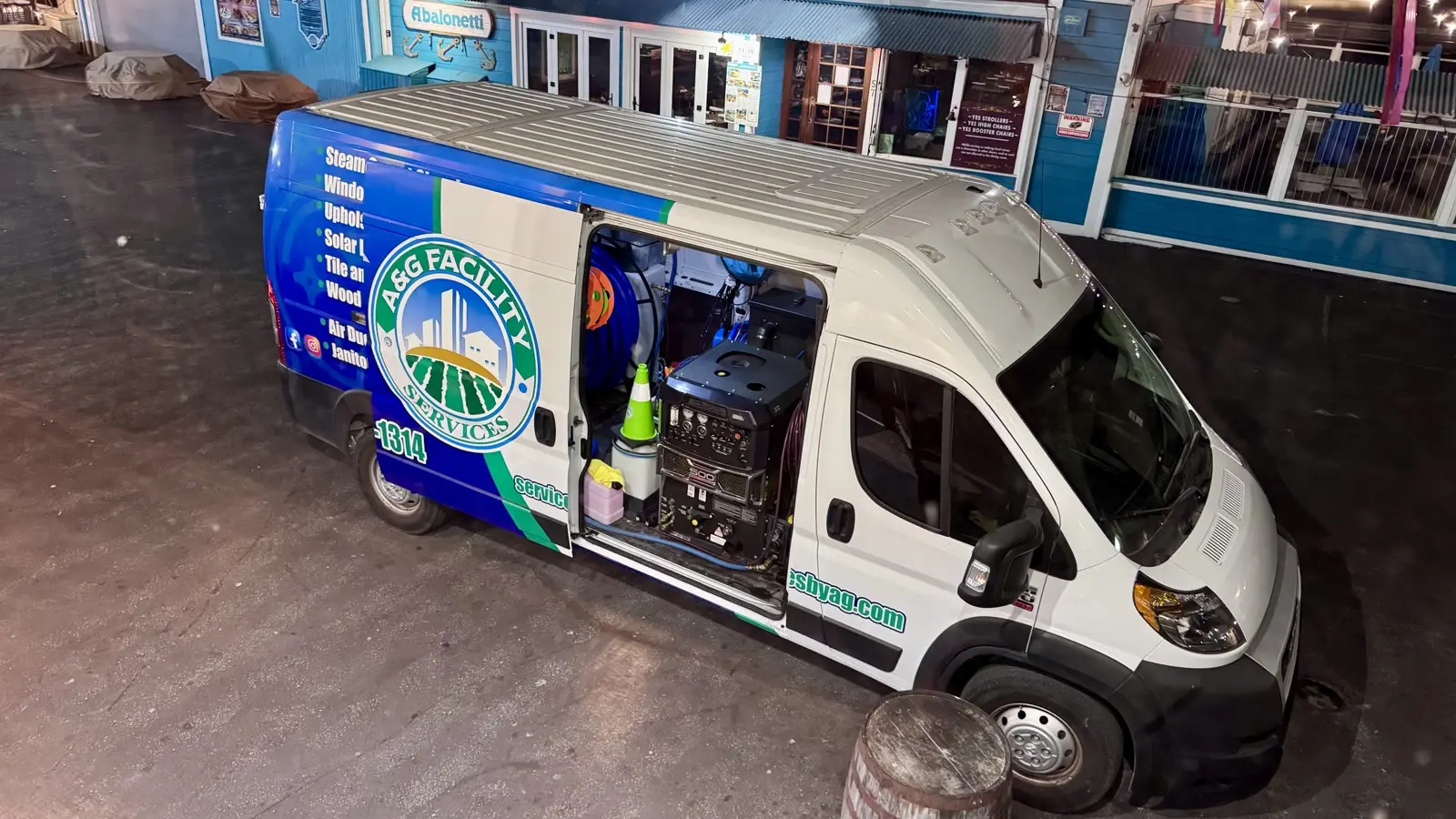 5 min read
Pressure & Soft Washing
Soft Washing vs Pressure Washing: Which to Use
Soft washing cleans with a low-pressure rinse and a cleaning solution that does the work, so it suits roofs, stucco and painted siding. Pressure washing cleans with force, so it suits concrete, pavers and other hard, uncoated surfaces.
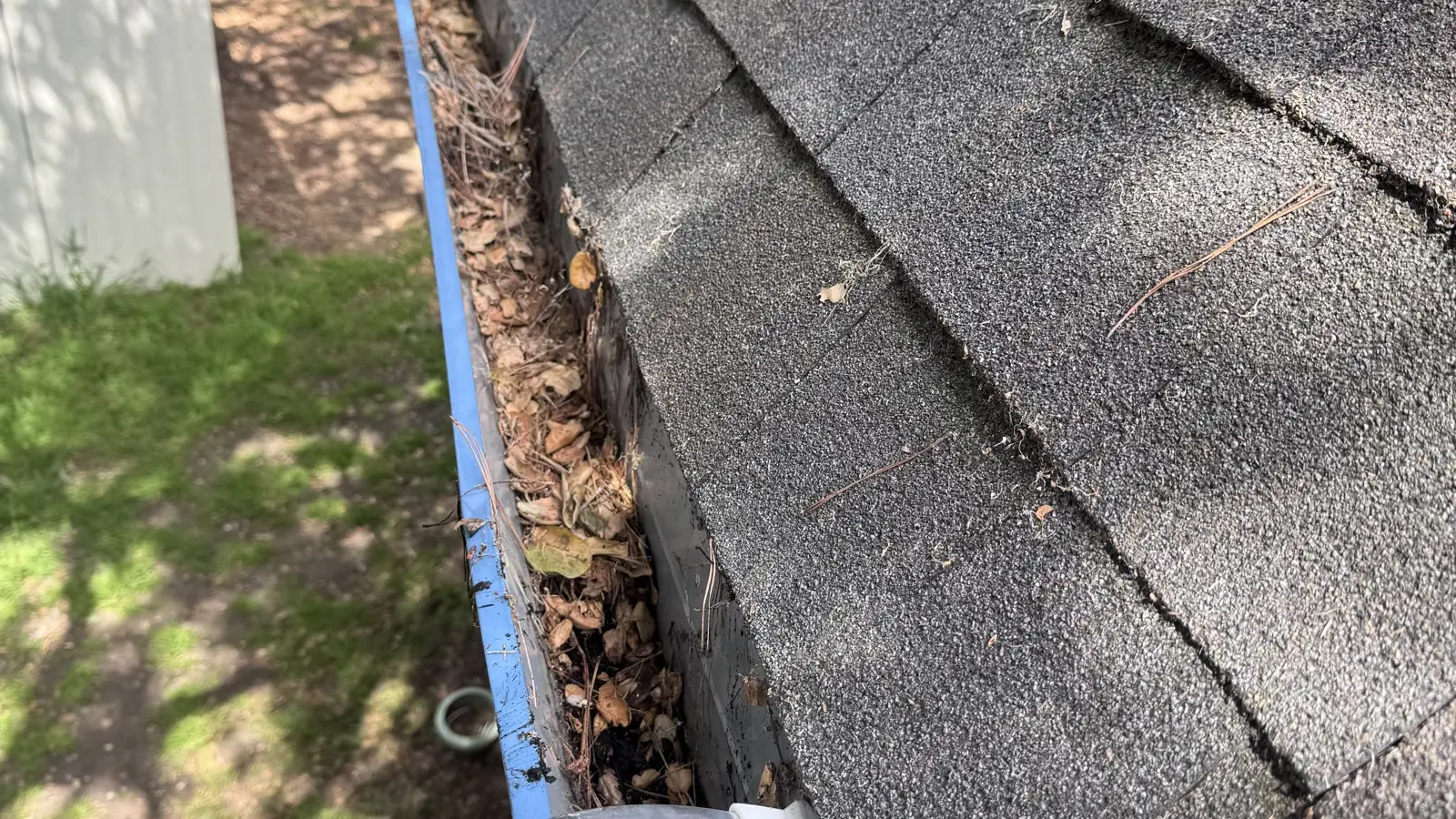 5 min read
Pressure & Soft Washing
Roof Soft Wash: Remove Black Streaks Safely
A roof soft wash applies a diluted bleach solution at low pressure, lets it dwell for 15 to 20 minutes, and rinses it off gently. The roofing industry recommends it because pressure washing strips the granules that protect asphalt shingles.
 7 min read
Pressure & Soft Washing
DIY vs Professional Pressure Washing: When to Hire
Doing it yourself makes sense for a small concrete patio or a few trash cans. Hire a professional for second stories, soft wood, stucco, siding, large commercial lots, or any job where the wash water has to be contained. The risks are real injuries and costly surface damage.
Need pressure washing in Monterey County?
Tell us about your property and we will send a free, no-obligation estimate.