
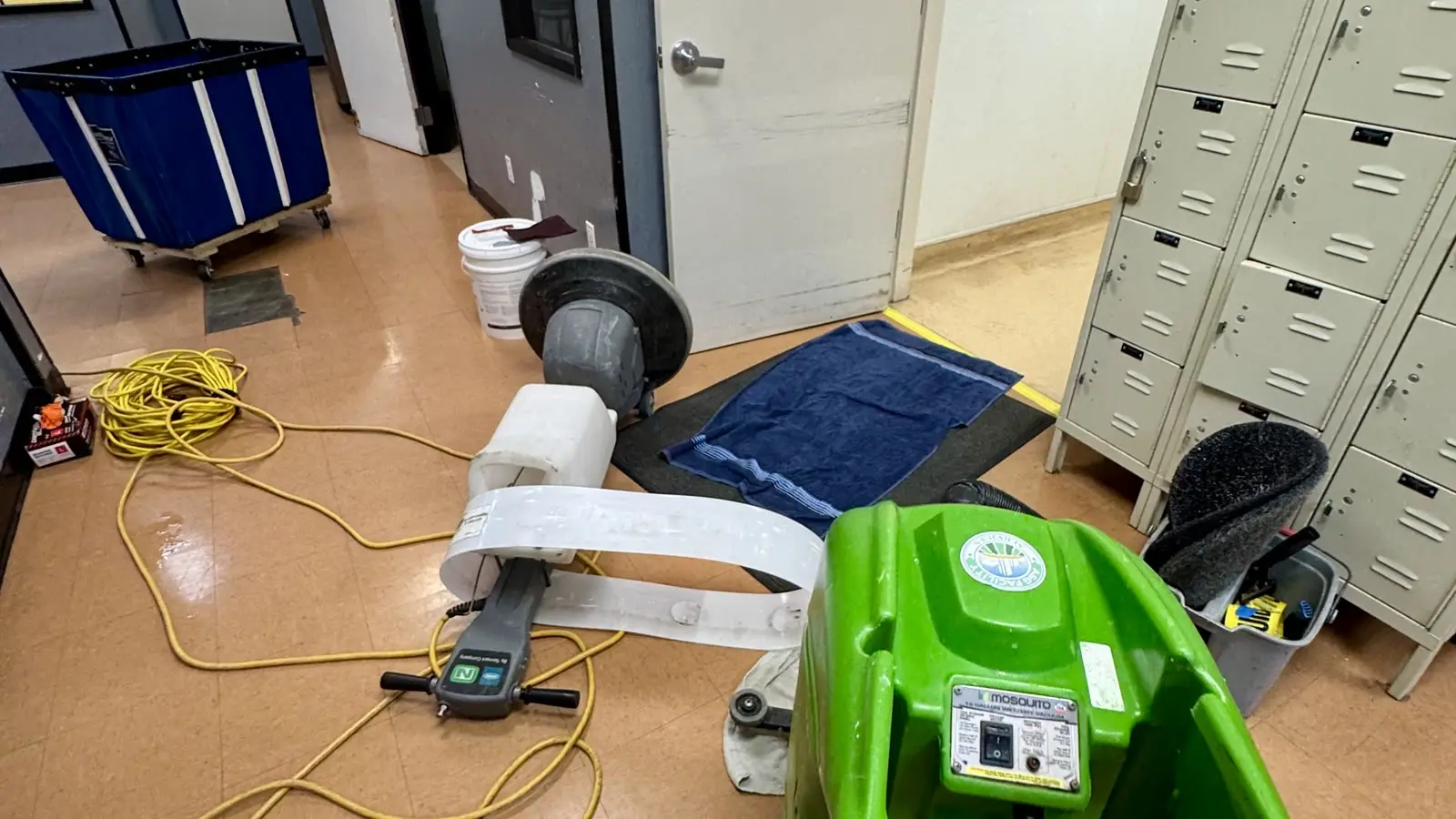
Commercial Cleaning
Post-Construction Cleaning Checklist: Rough, Final and Touch-Up Phases
Post-construction cleaning happens in three phases: a rough clean while trades are still working, a final clean once they finish, and a touch-up right before move-in. The hardest part is fine dust on every surface and inside vents, which needs HEPA vacuums and damp wiping, not dry sweeping.
A&G Facility Cleaning ServicesPublished 5 min read
Key takeaways
- Post-construction cleaning runs in three phases: rough, final and touch-up.
- Work top down and capture fine dust with HEPA vacuums and damp cloths; California's silica rule restricts dry sweeping and compressed air where they raise exposure.
- EPA advises sealing HVAC registers during dusty work and not running the system until the dust is cleaned up.
- Price depends on size, phase, debris and extras; Thumbtack's 2026 national average for post-construction cleaning was $210 to $379, mostly for homes.
On this page
- What post-construction cleaning covers
- Phase 1: rough clean checklist
- Phase 2: final clean, room by room
- Controlling fine dust on surfaces and vents
- Windows and glass
- Phase 3: touch-up clean before move-in
- Safety on a post-construction job
- What drives post-construction cleaning cost
- Getting help in Salinas and Monterey County
- Room-by-room post-construction checklist
- Questions people ask
What post-construction cleaning covers
Post-construction cleaning removes the dust, debris, residue and labels left after building or remodeling, so the space is ready to use. It is different from routine cleaning because the soil is different: drywall dust, sawdust, paint drips, caulk, adhesive, stickers on glass and grit in every track and corner.
Most jobs run in three phases:
- Rough clean, while trades are still on site. Clear debris and the worst dust so work can continue safely.
- Final clean, after the trades finish. Every surface, top to bottom, inside and out.
- Touch-up clean, right before move-in or the final walkthrough, to catch dust that settled and marks left by punch list work.
Some projects combine the final and touch-up phases. On larger commercial jobs, the general contractor usually sets the dates for each phase in the project schedule.
RelatedOur post-construction cleaning servicePhase 1: rough clean checklist
The rough clean makes the site workable, not finished. It happens once the heavy work slows and before finishes like paint touch-up, flooring and fixtures go in.
- Haul out scrap, packaging, cut-offs and loose debris
- Vacuum heavy dust from floors with a HEPA-filtered vacuum
- Wipe down window sills, ledges and the tops of door frames
- Clear dust from inside cabinets and drawers before shelves go in
- Remove protective film only where the trades are done with it
- Empty and wipe out sinks and tubs used as work surfaces
Coordinate with the site lead. Crews work around open trades, so the rough clean is often split over several visits.
RelatedPost-Construction Cleaning in Salinas and Monterey CountyPhase 2: final clean, room by room
The final clean is the detailed pass that turns a job site into a usable space. Always work from the ceiling down, so dust you knock loose lands on surfaces you have not cleaned yet.
In every room:
- Light fixtures, ceiling fans, vents and return grilles
- Walls and doors spot-cleaned for scuffs, fingerprints and tape marks
- Door frames, trim, baseboards and outlet covers
- Windows, frames, sills and tracks
- Floors vacuumed and damp mopped, or carpet vacuumed and extracted
Restrooms: fixtures, mirrors, partitions, tile and grout, grout haze, caulk smears and stickers on porcelain.
Kitchens and break rooms: inside and outside of cabinets and drawers, appliances inside and out, countertops, backsplash, sink and faucet.
Offices and open areas: furniture if already delivered, window coverings, glass partitions and the tops of tall cabinets.
RelatedTile and grout cleaning after a remodelControlling fine dust on surfaces and vents
Fine construction dust is the main reason a post-construction clean takes longer than it looks. It hangs in the air, settles on every flat surface for days and gets pulled into the HVAC system.
Capture it instead of moving it around. HEPA-filtered vacuums and damp cloths pick dust up. Dry sweeping and blowing it off with compressed air just put it back in the air. For construction work that creates respirable crystalline silica, such as cutting concrete, tile or stone, Cal/OSHA's rule (Title 8 Section 1532.3) and the federal OSHA standard (29 CFR 1926.1153) both say employers shall not allow dry sweeping or dry brushing, or compressed air to clean surfaces, where it could add to worker exposure, unless safer methods are not feasible.
Protect the air system too. The EPA advises that during dusty construction or renovation you seal off supply and return registers and do not run the heating and cooling system until the dust has been cleaned up. It also says to change filters regularly, and more often if they clog. After the final clean, replace the filter and wipe the grilles. EPA does not recommend routine duct cleaning, only as needed, for example when ducts are clogged with excessive dust and debris.
RelatedHigh dusting for vents, beams and light fixturesWindows and glass
New windows and glass doors arrive with stickers, labels, paint specks, caulk and plaster splatter, and they are among the slowest items on the list. They also show every streak once the lights go on.
- Remove manufacturer labels and adhesive with a remover that is safe for the glass and frame finish
- Lift paint and caulk carefully, after checking with the glazing contractor or manufacturer about any coatings on the glass
- Vacuum grit out of tracks before sliding windows and doors are opened and closed much
- Clean frames, sills and weep holes
- Wash inside and outside glass last in the final clean, after the dusty work is done
High or hard-to-reach glass may need lifts or poles, so note it during the walkthrough.
RelatedWindow cleaning for new and remodeled buildingsPhase 3: touch-up clean before move-in
The touch-up clean catches what happened after the final clean. Dust keeps settling for days after work stops, and punch list repairs leave new marks.
- Dust all flat surfaces again, including sills, ledges and shelves
- Wipe fingerprints from glass, doors, switches and stainless steel
- Clean up after punch list work such as paint touch-ups and hardware changes
- Vacuum and mop floors one more time
- Check restrooms and the kitchen, then stock paper and soap if the space is opening
- Do a walkthrough with the owner or contractor and fix anything flagged
Schedule the touch-up as close to move-in as the project allows.
RelatedOur high dusting serviceSafety on a post-construction job
Post-construction cleaning happens on what may still be an active work site, so safety has to be planned. Confirm with the general contractor which areas are released for cleaning, and stay out of areas where trades are working.
- Wear eye protection and gloves when handling debris, sharp scraps and cleaning chemicals
- Use ladders and lifts only on stable ground, and do not stand on fixtures or cabinets
- Follow the silica rules above where concrete, tile or stone was cut
- In buildings built before 1978, ask whether lead-based paint was disturbed. EPA's Renovation, Repair and Painting rule requires firms that disturb lead-based paint in homes, child care facilities and kindergartens built before 1978 to be EPA- or state-certified and to use certified renovators. Ask the contractor how lead dust cleanup is being handled before a general cleaning crew comes in.
What drives post-construction cleaning cost
Post-construction cleaning is priced by size, phase and condition, and it costs more than routine cleaning of the same space because of the dust and detail work. National figures are mostly for homes. Thumbtack's 2026 cost guide, based on its own data, puts the national average at $210 to $379, with simpler jobs as low as $140 and large renovation cleanups at $592 or more.
Thumbtack lists the main cost factors:
- Size of the space
- Level of cleaning, with a rough clean costing less than a detailed final clean
- Amount of debris, including construction waste hauling
- Location, with labor generally costing more in urban areas
- Extras such as exterior window washing, pressure washing or carpet deep cleaning
Commercial projects are usually quoted per square foot or per phase after a walkthrough. Ask whether the quote covers all three phases, windows inside and out, high work, and debris removal, or only the final clean.
RelatedHow commercial cleaning is priced per square footGetting help in Salinas and Monterey County
Book the cleaning crew early, ideally when you set the construction schedule, so the phases line up with the trades. A&G Facility Cleaning Services provides post-construction cleaning, window cleaning, high dusting, floor care and carpet cleaning for businesses, schools and other buildings in Salinas, Monterey, Carmel-by-the-Sea, Carmel Valley, Seaside, Hollister and Watsonville. The company is licensed and insured and offers free estimates. Call (831) 208-1314 to walk the site and plan the phases.
RelatedPlan your post-construction clean with a free estimateRoom-by-room post-construction checklist
Use this as a walkthrough sheet. The rough clean makes the site workable; the final and touch-up cleans make it ready for people.
| Area | Rough clean | Final and touch-up clean |
|---|---|---|
| Ceilings and vents | Keep registers sealed during dusty work | Wipe fixtures, vents and grilles; replace HVAC filter |
| Walls and trim | Knock down heavy dust | Spot-clean walls, wipe trim, frames and baseboards |
| Windows and glass | Remove loose debris from sills | Labels, paint specks, tracks, inside and outside glass |
| Cabinets and shelves | Vacuum dust before shelves go in | Inside and out, drawers, pulls and tops |
| Restrooms | Clear debris from fixtures | Fixtures, grout haze, caulk smears, mirrors, partitions |
| Kitchens and break rooms | Clear debris and packaging | Appliances inside and out, counters, sink, backsplash |
| Hard floors | HEPA vacuum heavy dust | Vacuum, damp mop, remove paint and adhesive spots |
| Carpet | Keep protective covering in place | Vacuum and hot water extraction |
| Exterior entries | Clear scrap and packaging | Sweep, wash entries, clean door glass |
Ceilings and vents
- Rough clean
- Keep registers sealed during dusty work
- Final and touch-up clean
- Wipe fixtures, vents and grilles; replace HVAC filter
Walls and trim
- Rough clean
- Knock down heavy dust
- Final and touch-up clean
- Spot-clean walls, wipe trim, frames and baseboards
Windows and glass
- Rough clean
- Remove loose debris from sills
- Final and touch-up clean
- Labels, paint specks, tracks, inside and outside glass
Cabinets and shelves
- Rough clean
- Vacuum dust before shelves go in
- Final and touch-up clean
- Inside and out, drawers, pulls and tops
Restrooms
- Rough clean
- Clear debris from fixtures
- Final and touch-up clean
- Fixtures, grout haze, caulk smears, mirrors, partitions
Kitchens and break rooms
- Rough clean
- Clear debris and packaging
- Final and touch-up clean
- Appliances inside and out, counters, sink, backsplash
Hard floors
- Rough clean
- HEPA vacuum heavy dust
- Final and touch-up clean
- Vacuum, damp mop, remove paint and adhesive spots
Carpet
- Rough clean
- Keep protective covering in place
- Final and touch-up clean
- Vacuum and hot water extraction
Exterior entries
- Rough clean
- Clear scrap and packaging
- Final and touch-up clean
- Sweep, wash entries, clean door glass
Questions people ask
What does post-construction cleanup mean?
Post-construction cleanup is the cleaning done after building or remodeling to remove construction dust, debris, paint and adhesive residue, labels and grit so the space can be used. It usually runs in three phases: a rough clean while trades are still working, a detailed final clean after they finish, and a touch-up clean right before move-in or the final walkthrough.
What should be on a post-construction cleaning checklist?
A good checklist goes room by room and top to bottom: light fixtures, vents and grilles, walls and trim, doors and frames, windows with labels and tracks, cabinets inside and out, restroom fixtures and grout haze, kitchen appliances, and finally floors. Add debris removal, an HVAC filter change, and a last walkthrough with the owner or contractor to catch anything missed.
How much does post-construction cleaning cost?
Thumbtack's 2026 national cost guide puts the average for post-construction cleaning at $210 to $379, with simple jobs around $140 and large renovation cleanups at $592 or more. Those figures mostly reflect homes. Commercial projects are usually quoted per square foot or per phase after a walkthrough, and price depends on size, the phases included, debris and extras like windows or carpet cleaning.
How do cleaning companies charge for post-construction cleaning?
Most companies quote per square foot, per phase or as a flat project price after seeing the site, and some charge hourly for small jobs. The price rises with the size of the space, the level of cleaning, the amount of debris and extras such as exterior windows, pressure washing or carpet extraction. Ask which phases and tasks are included so you can compare quotes fairly.
What equipment is used for post-construction cleaning?
The core tools are HEPA-filtered vacuums, microfiber cloths for damp wiping, extension poles and ladders for high surfaces, safe scrapers and adhesive removers for glass and floors, and mops or auto scrubbers for hard floors. Dry sweeping and compressed air are avoided because they put fine dust back in the air, and California's silica rule restricts them where they raise worker exposure.
Who offers post-construction cleaning in Salinas?
A&G Facility Cleaning Services, at 161 Main St #3, in Salinas, provides post-construction cleaning along with window cleaning, high dusting, floor care and carpet cleaning across Salinas, Monterey, Carmel-by-the-Sea, Carmel Valley, Seaside, Hollister and Watsonville. The company has more than 15 years in business, is licensed and insured, and offers free estimates at (831) 208-1314.
Sources
We checked the facts in this guide against these sources.
- 1.Title 8, Section 1532.3. Occupational Exposures to Respirable Crystalline Silica, California Department of Industrial Relations
- 2.Respirable Crystalline Silica, 29 CFR 1926.1153, Occupational Safety and Health Administration
- 3.Should You Have the Air Ducts in Your Home Cleaned?, U.S. Environmental Protection Agency
- 4.Lead Renovation, Repair and Painting Program Rules, U.S. Environmental Protection Agency
- 5.Post-Construction Cleaning Rates: Costs and Tips, Thumbtack
Keep reading
 5 min read
Commercial Cleaning
Commercial Cleaning Cost Per Square Foot: What Drives the Price
Industry ranges from ISSA put general office cleaning at $0.09 to $0.17 per square foot and medical space at $0.14 to $0.29. Your real price depends mostly on labor hours: how often you clean, how many restrooms you have, your floors and when the work happens.
 5 min read
Commercial Cleaning
Clean Office First Impressions: What People See
People size up an office in the first few steps: the entry mat and door glass, the lobby floor, the front desk, and above all the restroom. Keeping those few spots right every day does more for your image than a deep clean twice a year.
 5 min read
Commercial Cleaning
Office Cleaning Checklist: Daily to Quarterly
A good office cleaning checklist splits the work by area and by frequency. Daily: trash, restrooms, break room, high-touch points and main floors. Weekly: detailed dusting, glass and edges. Monthly: vents and high dusting. Quarterly: deep carpet cleaning and hard floor refinishing.
Need post-construction cleaning in Monterey County?
Tell us about your property and we will send a free, no-obligation estimate.