
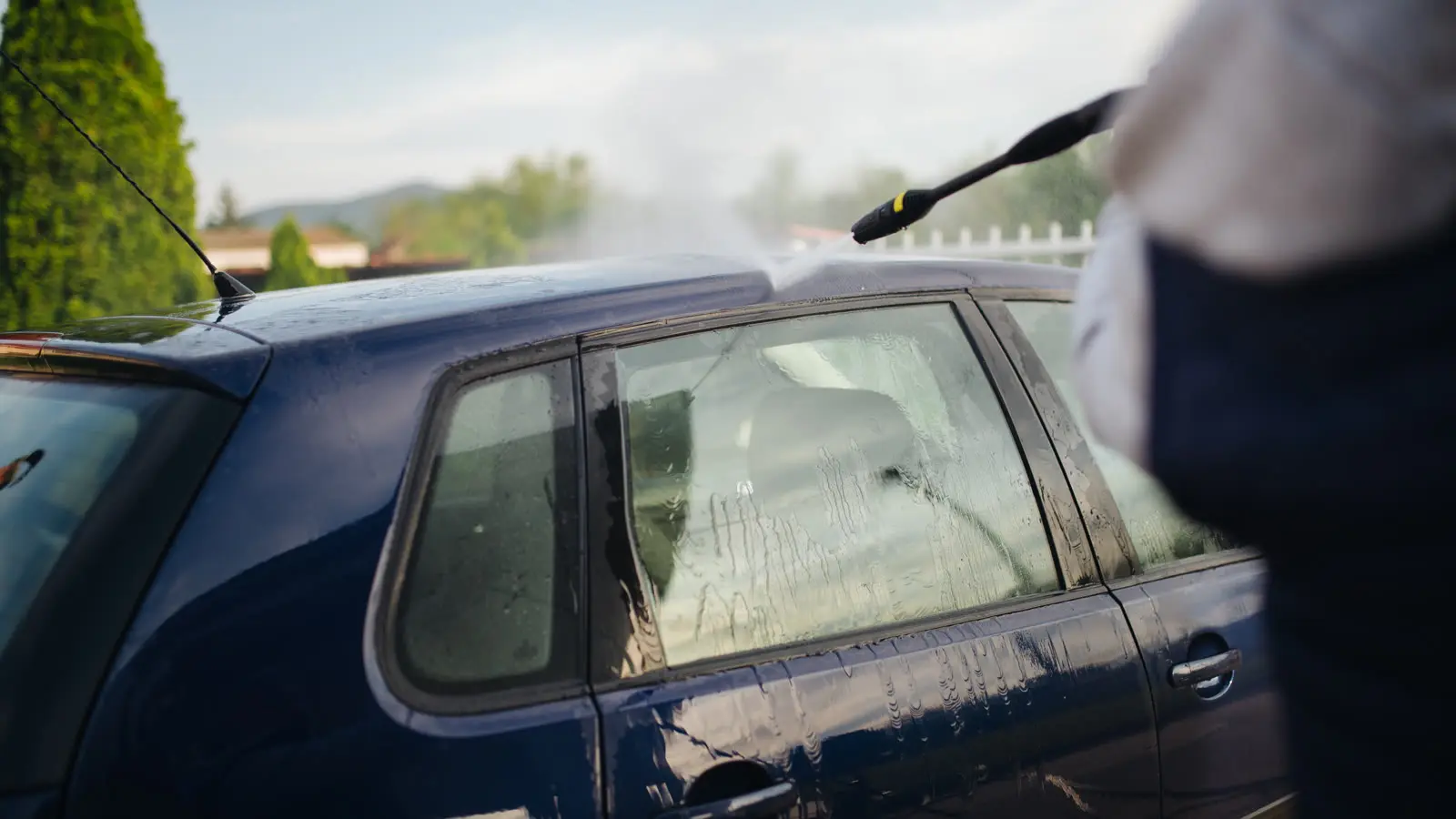
Pressure & Soft Washing
Driveway, Patio and Deck Cleaning: The Right Method for Each Surface
The best way to clean a driveway is to sweep, pre-treat stains, wash with a surface cleaner, and rinse, but the right pressure depends on the material. Concrete handles more than pavers, clay brick much less, and wood and composite decks have their own limits. Here is what industry and manufacturer guidance says.
A&G Facility Cleaning ServicesPublished Updated 6 min read
Photo: Shixart1985, Wikimedia Commons, CC BY 2.0
Key takeaways
- Sweep and treat stains before washing; pressure alone does not remove oil, rust or tannin stains.
- Concrete pavers need a wide spray at a low angle so the joint sand stays in place.
- The Brick Industry Association caps pressure at 400 psi at the nozzle for clay brick unless the maker allows more.
- Power washing can strip soft wood, and some composite decking has strict pressure and distance limits.
- If you seal, the surface must be completely dry first, with at least 24 hours without moisture.
On this page
- The best way to clean a driveway: sweep, treat, wash, rinse
- Poured concrete driveways and patios
- Concrete pavers: protect the joint sand
- Clay brick driveways and walkways
- Wood decks: gentle cleaning and patience before finishing
- Composite decks: follow the manufacturer's limits
- Sealing after cleaning
- What not to do, and getting help locally
- Cleaning method and pressure guidance by surface
- Questions people ask
The best way to clean a driveway: sweep, treat, wash, rinse
Every hard surface gets cleaner, with less damage, when you follow the same four steps. Pressure is only one of them.
- Sweep or blow off loose dirt, leaves and grit. Grit under a spray tip acts like sandpaper.
- Treat stains first. Oil, rust, tire marks and leaf tannins each need the right cleaner and some dwell time.
- Wash the whole area evenly. On flat surfaces, a rotary surface cleaner gives a far more uniform result than a wand alone.
- Rinse thoroughly, working downhill, and keep wash water out of the storm drain.
The mistakes that cause damage almost always come from skipping step 2 and trying to blast a stain out with a narrow tip. That leaves stripes and etched spots that look worse than the stain did.
The sections below cover how each material differs. If your driveway also has oil spots, start with those.
RelatedProfessional driveway and patio pressure washingPoured concrete driveways and patios
Broom-finished poured concrete is the most forgiving surface, which is why most people start there. It can take a surface cleaner at normal pressure, and it responds well to detergent and hot water.
A few concrete-specific tips:
- Use a surface cleaner or the widest fan tip you have. Narrow tips leave visible lines.
- Pre-treat oil drips and tire marks with a concrete degreaser and let it sit before washing.
- Rust from sprinklers, furniture and fertilizer needs a rust remover made for concrete. More pressure will not fix it.
- Decorative, stamped or colored concrete often has a sealer on it. Test a hidden spot, use lower pressure, and plan to reseal.
If you want to clean concrete without a pressure washer, it can be done. Sweep, apply a concrete cleaner or a strong detergent solution, scrub with a stiff deck brush, and rinse with a garden hose. It takes more effort, but on lightly soiled concrete the result can be close.
RelatedStep by step oil stain removal for concreteConcrete pavers: protect the joint sand
Interlocking concrete pavers can be pressure washed, but the joints are the weak point. The sand between pavers locks them together, and a narrow spray at a steep angle blasts it out.
The Concrete Masonry and Hardscapes Association (CMHA), which publishes the industry's technical guidance on pavers, lays out the order of work. Remove stains on specific areas first. Then use a cleaner across the whole pavement to remove efflorescence and dirt. Its guidance notes that high pressure sprayers apply cleaner and water between 1,000 and 4,000 psi, that a nozzle with a wide spray covers large areas efficiently, and that a low angle of attack from a wide nozzle reduces the risk of dislodging joint sand.
Efflorescence, the white chalky haze on newer pavers, is common. CMHA says it can peak as early as 60 days after installation, does not affect the structural performance or durability of the pavers, and can be removed with a proprietary efflorescence remover.
After cleaning, check the joints. If sand washed out, refill them before sealing or before the pavers start to shift.
RelatedPressure Washing in Salinas and Monterey CountyClay brick driveways and walkways
Clay brick needs far less pressure than concrete. The Brick Industry Association's Technical Note 20 on cleaning brickwork is specific about it.
- Do not use water pressures higher than 400 psi, measured at the nozzle tip, unless the brick manufacturer permits it.
- Use a stainless steel 25 to 50 degree fan tip held at least 12 inches from the brick.
- Pre-wet with very low pressure, under 100 psi, and keep the area wet until the final rinse.
- High pressure, above 800 psi, is not appropriate for brick and may damage the brickwork.
The same note warns that acid-based cleaning solutions may not be appropriate for brick pavements with joint sand stabilizers or polymeric sand in the joints, and recommends checking cleaner compatibility with the paver manufacturer first.
In practice, that means brick is a low-pressure, chemistry-first job. Let the cleaner work and rinse gently.
RelatedLow-pressure soft washing for delicate surfacesWood decks: gentle cleaning and patience before finishing
Wood decks are the surface most often damaged by pressure washing. The USDA Forest Products Laboratory's guide to deck finishes says aggressive scrubbing with a caustic cleaner or power washing can remove wood from the surface, particularly on softer wood such as western redcedar.
The same guide recommends commercial deck cleaners, brighteners or restorers to remove mildew and dirt and let the natural color show. For mildew, it describes liquid household bleach diluted with 3 parts water plus some detergent, and warns never to use a detergent containing ammonia, because ammonia reacts with bleach to form a toxic gas. Rinse the bleach solution off the deck with water.
If you plan to stain or seal after cleaning, wait. The Forest Products Laboratory advises allowing at least 2 warm, windy days for the deck to dry before finishing.
If you do use a pressure washer on wood, use a wide fan tip, low pressure, and long strokes with the grain. Light sanding may be needed if the fibers raise.
RelatedOur soft washing serviceComposite decks: follow the manufacturer's limits
Composite decking can usually be washed with soap, a soft brush and a hose, and some products tolerate a pressure washer within set limits. Always check your brand and product line, because the rules differ.
Trex is a good example. For its Transcend, Enhance and Select lines, Trex says a pressure washer with no greater than 3100 psi, a fan attachment and a soap dispenser may be used, with the fan tip held no closer than 8 inches from the decking. Its recommended routine is to spray the deck with soap, gently scrub each board with a soft bristle brush, then rinse thoroughly, since dirty water left to dry leaves a film.
For its early-generation decking, Trex does not recommend pressure washing at all, and it warns that a pressure washer above 3100 psi could damage boards and void the warranty.
If you do not know what your deck is made of, treat it gently until you find out.
RelatedA full patio and outdoor area cleaning checklistSealing after cleaning
Sealing is optional on plain concrete but worth considering for pavers, colored concrete and wood. A sealer helps the surface resist stains and makes the next cleaning easier.
Timing is the part most people get wrong. CMHA guidance for pavers says the cleaned surface must be completely dry before most sealers are applied, with at least 24 hours without moisture or surface dampness first, and that traffic should stay off until the sealer is completely dry, typically 24 hours. For wood decks, the Forest Products Laboratory advises at least 2 warm, windy days of drying after cleaning.
On the Central Coast, that makes summer and early fall the easiest seasons for sealing. Morning fog can keep surfaces damp, so start once the surface is truly dry.
RelatedThe best time of year to clean and seal outdoor surfacesWhat not to do, and getting help locally
Most driveway and deck damage comes from a short list of mistakes:
- Using a zero-degree or narrow tip on any surface.
- Holding the nozzle close to chase a stain instead of treating it.
- Pressure washing soft wood, older composite or brick at full pressure.
- Blasting joint sand out of pavers and not replacing it.
- Sealing a surface that is still damp.
- Letting soapy or oily wash water run into the street. City of Salinas stormwater guidance says wash water must never go into the storm drain system.
- On the Monterey Peninsula, washing hard surfaces with drinking water in ways local Rule 162 treats as water waste.
A&G Facility Cleaning Services in Salinas cleans driveways, patios, walkways and decks for homes and businesses across Monterey County. We are licensed and insured with more than 15 years in business, and estimates are free. Call (831) 208-1314.
RelatedGet a free driveway cleaning estimateCleaning method and pressure guidance by surface
Pressure figures come from the industry or manufacturer sources named. When guidance differs, follow the maker of your specific product.
| Surface | Recommended method | Pressure guidance |
|---|---|---|
| Poured concrete | Sweep, degrease stains, surface cleaner, rinse | Wide fan tip or surface cleaner; never a narrow tip held close |
| Concrete pavers | Stains first, then paver cleaner, then refill joints | CMHA: sprayers run 1,000 to 4,000 psi; use a wide spray at a low angle |
| Clay brick | Pre-wet, apply cleaner, low-pressure rinse | BIA: no more than 400 psi at the nozzle; 25 to 50 degree tip, 12 inches away |
| Wood deck | Deck cleaner or diluted bleach, soft brush, rinse | Low pressure only; power washing can remove wood (USDA FPL) |
| Composite (Trex Transcend, Enhance, Select) | Soap, soft brush, fan tip rinse | No more than 3100 psi, fan tip at least 8 inches away |
| Composite (early-generation Trex) | Composite deck cleaner and brush | Pressure washing not recommended by the manufacturer |
Poured concrete
- Recommended method
- Sweep, degrease stains, surface cleaner, rinse
- Pressure guidance
- Wide fan tip or surface cleaner; never a narrow tip held close
Concrete pavers
- Recommended method
- Stains first, then paver cleaner, then refill joints
- Pressure guidance
- CMHA: sprayers run 1,000 to 4,000 psi; use a wide spray at a low angle
Clay brick
- Recommended method
- Pre-wet, apply cleaner, low-pressure rinse
- Pressure guidance
- BIA: no more than 400 psi at the nozzle; 25 to 50 degree tip, 12 inches away
Wood deck
- Recommended method
- Deck cleaner or diluted bleach, soft brush, rinse
- Pressure guidance
- Low pressure only; power washing can remove wood (USDA FPL)
Composite (Trex Transcend, Enhance, Select)
- Recommended method
- Soap, soft brush, fan tip rinse
- Pressure guidance
- No more than 3100 psi, fan tip at least 8 inches away
Composite (early-generation Trex)
- Recommended method
- Composite deck cleaner and brush
- Pressure guidance
- Pressure washing not recommended by the manufacturer
Questions people ask
What is the best way to clean a driveway?
Sweep it, pre-treat stains such as oil or rust with the right cleaner, then wash the whole surface evenly with a rotary surface cleaner or a wide fan tip, and rinse downhill. Treating stains before washing matters more than pressure. Keep wash water out of the storm drain, especially if you used degreaser or detergent.
How do you clean a concrete driveway without pressure washing it?
Sweep the driveway, wet it, and apply a concrete cleaner or a strong detergent solution. Let it sit for a few minutes without drying, scrub with a stiff deck brush, and rinse with a garden hose. Use a degreaser on oil spots first. It takes more effort than a pressure washer, but lightly soiled concrete can come out close to the same.
How do I make my driveway look new again?
Treat each stain with the right product, clean the full surface evenly so there are no stripes, and consider sealing once it is completely dry. For pavers, refill any joint sand that washed out. For badly etched or cracked concrete, cleaning will improve the look but not repair the surface, and resurfacing may be the better option.
Should I seal my driveway or patio after cleaning?
Sealing is optional for plain concrete but helps pavers, colored concrete and wood resist stains. The Concrete Masonry and Hardscapes Association says pavers must be completely dry, with at least 24 hours without moisture, before most sealers go on, and traffic should stay off until it dries. On wood decks, the USDA Forest Products Laboratory advises at least 2 warm, windy days of drying first.
How much does it cost to get a driveway cleaned?
Price depends on the size of the driveway, the surface, how many stains need treatment, access, and whether sealing is included. Pavers that need joint sand replaced or a sealer cost more than a simple concrete wash. Ask for a written estimate that lists the method, stain treatment and wash water handling so you can compare quotes fairly.
Sources
We checked the facts in this guide against these sources.
- 1.Cleaning, Sealing and Joint Sand Stabilization of Interlocking Concrete Pavement (PAV-TEC-005), Concrete Masonry and Hardscapes Association
- 2.Technical Note 20: Cleaning Brickwork, Brick Industry Association
- 3.Finishes for Wood Decks (Knaebe, 2013), USDA Forest Service, Forest Products Laboratory
- 4.How to Clean a Trex Deck, Trex Company
- 5.Stormwater Best Management Practices: Mobile Washers and Cleaners, City of Salinas Public Works
- 6.Rule 162: Stage 1 Water Conservation, Prohibition on Water Waste, Monterey Peninsula Water Management District
Keep reading
 5 min read
Pressure & Soft Washing
Best Time of Year to Pressure Wash in Salinas
On the Central Coast, the best time to pressure wash is from late spring to early fall. NOAA climate normals show Salinas and Monterey get only a fraction of an inch of rain from June through September, so surfaces dry fully and sealers cure. Early fall, before the first storms, is the most useful window.
 6 min read
Pressure & Soft Washing
How to Remove Oil Stains From Concrete, Fresh or Old
To remove oil from concrete, soak up fresh oil with an absorbent like cat litter, scrub set-in stains with a concrete degreaser, and pull out old, deep stains with a poultice. Pressure washing helps rinse and lift the loosened oil, but the oily water must be captured, not sent down the storm drain.
 5 min read
Pressure & Soft Washing
Patio Cleaning Checklist: Get Your Outdoor Space Ready for Guests
Clean a patio from the top down and from dry to wet: clear and sweep, wash windows and furniture, degrease the grill, then wash the deck and hard surfaces last, with the right cleaner for each material. Start about a week before a gathering so everything has time to dry.
Need pressure washing in Monterey County?
Tell us about your property and we will send a free, no-obligation estimate.