
Local Guides & Checklists
Window Cleaning in Monterey: How to Care for Glass in Salt Air and Fog
Glass near the Monterey coast collects a salty film from sea spray and fog, so it needs cleaning more often than the twice-a-year baseline: about every one to three months near the water. Rinse salt off frames and screens too, and use pure water or a squeegee so minerals do not dry on the glass.
A&G Facility Cleaning ServicesPublished Updated 6 min read
Key takeaways
- Breaking waves send salt into the air, and fog droplets form around that salt and settle it on glass, frames and screens.
- Naval Research Laboratory scientists found corrosion is worst at the surf zone and drops quickly over the first few hundred meters inland.
- Glass within a few blocks of the ocean usually needs cleaning every one to three months; inland Peninsula sites can stretch to quarterly or twice a year.
- Salt on frames, tracks and screens should be rinsed and dried, not left to sit, and wash water should stay out of storm drains.
On this page
- Why coastal glass gets dirty in a different way
- Distance from the water matters more than anything else
- Fog film and condensation on the inside of the glass
- Hard-water spots and why rinse water matters
- How often coastal glass needs cleaning
- Protecting frames, screens, tracks and hardware
- Wash water rules and getting help on the Monterey Peninsula
- Coastal window cleaning schedule by distance from the water
- Questions people ask
Why coastal glass gets dirty in a different way
Coastal glass gets dirty from salt and moisture, not just dust. The U.S. Geological Survey's Pacific Coastal Fog Project explains that breaking waves and bursting bubbles in whitecaps throw sea-spray droplets into the air. Those droplets dry into tiny sea-salt particles, and fog droplets form around them. Sea salt attracts water so well that fog droplets can form even when the air is not fully saturated.
On a window, that means two things. First, salty mist lands on the glass and dries into a thin, cloudy film. Second, the film is slightly sticky when damp, so dust, pollen and exhaust grime cling to it. The result is the hazy look that makes ocean-view glass seem dirty a few weeks after it was cleaned.
Inland glass in Salinas mostly fights dry dust. Monterey, Pacific Grove, Seaside and Carmel glass fights a mix of salt, moisture and dust, often on west-facing walls that take the weather head on. That mix changes how often you clean, what you clean with and what else around the window needs attention.
RelatedCleaning services in MontereyDistance from the water matters more than anything else
How close a building sits to the surf is the biggest factor in how fast salt builds up. Researchers at the U.S. Naval Research Laboratory, who study corrosion from sea spray, describe a zone of enhanced corrosion near the shoreline. In their words, corrosivity is worst right at the surf zone and then drops rapidly over hundreds of meters. Farther inland it keeps falling, but more slowly, and it still has an effect well beyond the beach.
That research was about metal on Navy equipment, but the same salt lands on your windows, frames and door hardware. In practice:
- Buildings facing the ocean or the bay, such as along the waterfront and bluffs, get the heaviest salt film and need the shortest cleaning intervals.
- Buildings a few blocks back still get salt on foggy and windy days, but less of it.
- Buildings well inland on the Peninsula get mostly dust and pollen, with salt only on stormy days.
Wind direction matters too. The side of the building facing the prevailing wind off the water collects more salt than the sheltered side, so it is normal to clean the weather side more often than the rest.
RelatedWindow Cleaning in Salinas and Monterey CountyFog film and condensation on the inside of the glass
Fog leaves residue on the outside of glass, and cool, damp air can cause condensation on the inside. The USGS describes fog drip, where fog deposits water droplets on plants, wires and other surfaces. Windows catch that drip too, and when it dries it leaves salt and grime behind in streaks and spots.
Inside, morning condensation on cold glass is common near the coast. The Environmental Protection Agency notes that condensation can be a sign of high indoor humidity, and recommends keeping indoor humidity below 60 percent, ideally between 30 and 50 percent, to limit mold. Water that runs off the glass collects in tracks and sills, where mildew can start.
A few habits help:
- Run bathroom and kitchen exhaust fans, and vent dryers outside, as the EPA recommends.
- Wipe heavy condensation off sills and tracks instead of letting it sit.
- Check the bottom corners of frames for dark spots and clean them early.
- Clean interior glass at least as often as you clean the exterior, so the inside film does not cancel out a clean outside.
Hard-water spots and why rinse water matters
White spots that will not wipe off are usually minerals left behind when water dried on the glass. On the coast they come from sprinklers, from hosing salt off windows and letting them air dry, and from salt itself. Once minerals bake on in the sun, they get harder to remove and may need special treatment.
The fix is to control what dries on the glass. The National Glass Association's cleaning paper describes two accepted methods:
- Traditional washing: soak the glass with clean water and a mild, non-abrasive glass cleaning solution, loosen the dirt, then remove all of the solution with a squeegee right away.
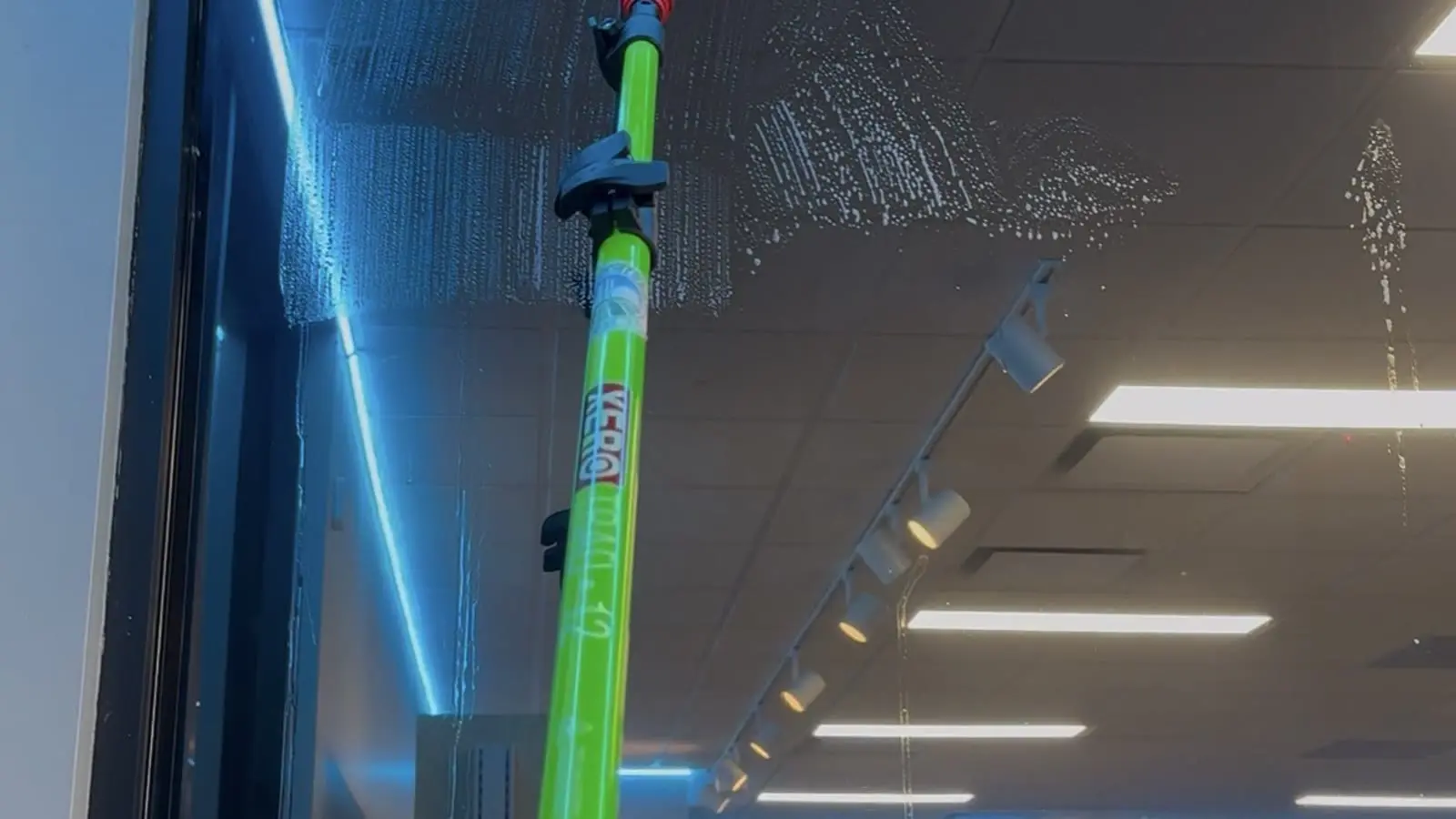
- Pure water pole systems: a brush on an extension pole scrubs with purified water, and the rinse is left to dry. The paper says that water must have 20 parts per million or less of total dissolved solids, and that tap water is not acceptable for this method.
If you rinse salt off windows with a garden hose between cleanings, squeegee or dry the glass afterward. Air-dried tap water trades a salt film for mineral spots. Point sprinklers away from glass, and deal with new spots early, before they set.
RelatedCleaning services in Carmel-by-the-Sea, CAHow often coastal glass needs cleaning
Near the ocean, plan on cleaning exterior glass every one to three months instead of twice a year. The National Glass Association says twice-yearly cleaning is generally sufficient, but that some regions need more frequent cleaning because of environmental factors. Salt air is one of those factors.
Use the table below as a starting point, then adjust. Look at the glass two to three weeks after a cleaning, in low morning or late afternoon sun. If you already see a haze, shorten the interval. If the glass still looks clear when the next visit comes around, stretch it.
Businesses have one more consideration: storefront glass gets judged up close, so shops and restaurants on the coast usually need their front glass done every one to two weeks no matter how far they are from the water. Homes with ocean views often schedule a cleaning before the clearest months of the year, when the view matters most to them, plus touch-ups after big storms.
The Glass Association paper also notes that glass can be permanently damaged when it is cleaned too rarely. Salt film left for years is harder to remove safely than salt film cleaned every few months.
RelatedCleaning schedules for commercial windows by building typeProtecting frames, screens, tracks and hardware
Salt does not stop at the glass, so a coastal window cleaning should include the parts around it. Frames, screens, tracks and door hardware hold salt in corners and grooves where rain does not reach.
- Screens: remove, rinse with fresh water, brush gently and let them dry fully before reinstalling. Salt-crusted screens block light and drip salty water onto clean glass.
- Tracks and weep holes: vacuum out sand and debris, then wipe. Clogged weep holes keep water in the track instead of letting it drain.
- Frames and sills: wipe salt film off with a damp cloth and dry them.
- Gaskets and seals: Cardinal Glass Industries advises drying all cleaning solution from sealants, gaskets and frames, and not leaving water or solution on window components.
- Door hardware and hinges: rinse and dry, since the Navy research shows salt is most corrosive close to the shore.
Avoid harsh chemicals around window edges. The National Glass Association warns that cleaning agents can get past glazing seals and damage the edge of insulating or laminated glass, and lists bleach, ammonia, strong acids and solvents among products to keep away from laminated glass.
RelatedWindow and storefront care in Carmel-by-the-SeaWash water rules and getting help on the Monterey Peninsula
On the Peninsula, window wash water needs to stay out of the storm drains. The City of Carmel-by-the-Sea states that dumping wash water into the gutter or storm drain is illegal, that its storm drains flow to creeks and the ocean without treatment, and that Carmel Bay is an Area of Special Biological Significance. The city asks businesses to prevent wash water from reaching storm drains and to direct it to landscaping where possible. A careful window cleaner uses little runoff, avoids soap where it is not needed, and keeps water off the street.
When you request a quote, mention how close the building is to the water, how high the glass goes, and whether screens, tracks and frames should be included. Those details change the work more than the number of windows does.
A&G Facility Cleaning Services, based in Salinas, cleans windows for homes and businesses in Monterey, Seaside, Carmel-by-the-Sea and Carmel Valley. The company is licensed and insured, and estimates are free. Call (831) 208-1314 to plan a schedule that fits your exposure to salt air.
RelatedOur window cleaning service for coastal homes and businessesCoastal window cleaning schedule by distance from the water
Starting points for exterior glass on the Monterey Peninsula. Clean the side facing the wind off the water more often, and add a visit after strong storms.
| Location | Exterior glass | Frames, screens and tracks |
|---|---|---|
| Oceanfront or bayfront | Every 4 to 6 weeks | Rinse and dry at every other visit |
| A few blocks from the water | Every 2 to 3 months | Two to three times a year |
| Inland Peninsula and Carmel Valley | Quarterly to twice a year | Once or twice a year |
| Coastal storefronts and restaurants | Front glass every 1 to 2 weeks | Quarterly, plus door tracks as needed |
| Interior side of ocean-view glass | Same schedule as the exterior | Wipe condensation from sills and tracks as it appears |
Oceanfront or bayfront
- Exterior glass
- Every 4 to 6 weeks
- Frames, screens and tracks
- Rinse and dry at every other visit
A few blocks from the water
- Exterior glass
- Every 2 to 3 months
- Frames, screens and tracks
- Two to three times a year
Inland Peninsula and Carmel Valley
- Exterior glass
- Quarterly to twice a year
- Frames, screens and tracks
- Once or twice a year
Coastal storefronts and restaurants
- Exterior glass
- Front glass every 1 to 2 weeks
- Frames, screens and tracks
- Quarterly, plus door tracks as needed
Interior side of ocean-view glass
- Exterior glass
- Same schedule as the exterior
- Frames, screens and tracks
- Wipe condensation from sills and tracks as it appears
Questions people ask
How often should windows near the ocean be cleaned?
Windows facing the ocean or bay usually need cleaning every four to six weeks, and glass a few blocks inland every two to three months. Sites farther inland on the Monterey Peninsula can often go quarterly or twice a year, the baseline the National Glass Association calls generally sufficient. Storefronts near the water usually need front glass cleaned every one to two weeks.
What is the average cost of residential window cleaning?
Thumbtack's 2026 national cost guide puts the typical range at about $184 to $387 for residential window cleaning, with most people paying around $266. Its national low and high ends are $106 and $685. These are national estimates; local prices depend on the number of windows, height, access, screens and tracks, and hard water or salt buildup.
What is the easiest way to clean your windows?
For most homeowners, the easiest effective method is a bucket of clean water with a mild, non-abrasive glass cleaner, a scrubber to loosen dirt, and a squeegee to pull everything off right away. Work in the shade, start at the top, and wipe the squeegee blade between strokes. Drying the glass this way avoids the mineral spots that air-dried hose water leaves behind.
Can I rinse my windows with tap water?
You can rinse with tap water if you squeegee or dry the glass right after. Left to air dry, tap water leaves mineral spots. Professional pure water systems are different: the National Glass Association says water left to dry on glass must have 20 parts per million or less of dissolved solids, and that tap water is not acceptable for that method.
Who offers window cleaning in Monterey?
A&G Facility Cleaning Services, based at 161 Main St #3, in Salinas, offers window cleaning for homes and businesses in Monterey, Seaside, Carmel-by-the-Sea, Carmel Valley and the rest of Monterey County. The company has more than 15 years in business, is licensed and insured, and provides free estimates. Call (831) 208-1314 to request one.
Sources
We checked the facts in this guide against these sources.
- 1.The Pacific Coastal Fog Project, U.S. Geological Survey
- 2.NRL protects naval assets: land, sea, and air, U.S. Naval Research Laboratory (via EurekAlert)
- 3.Proper Procedures for Cleaning Architectural Glass Products, Glass Technical Paper FB01-00 (2020), National Glass Association with GANA
- 4.Technical Service Bulletin IG12: Glass Cleaning Recommendations, Cardinal Glass Industries
- 5.A Brief Guide to Mold, Moisture and Your Home, U.S. Environmental Protection Agency
- 6.Storm Water Requirements, City of Carmel-by-the-Sea
- 7.Window cleaning prices, Thumbtack
Keep reading
 6 min read
Windows & Solar
How Often Should Commercial Windows Be Cleaned?
Most commercial buildings need exterior glass cleaned at least twice a year, the baseline the glass industry gives. Storefronts, entrances and restaurants need it every one to four weeks, and windy, dusty Salinas Valley sites often need it sooner.
 6 min read
Local Guides & Checklists
Commercial Cleaning in Carmel-by-the-Sea
Carmel businesses need cleaning built around small spaces, heavy visitor foot traffic, beach sand, dogs and salty ocean air. Clean before opening or after close, wash entry glass and mats often, and keep all wash water out of the storm drains that flow to Carmel Bay.
 5 min read
Local Guides & Checklists
Carpet Care on the Monterey Peninsula: Sand, Fog, Sun and Guests
Carpet on the Monterey Peninsula wears faster from tracked-in beach sand, dries slower in foggy, damp air, and fades near sunny ocean-view windows. Stop sand at the door, vacuum often, clean on drier days with fans and heat running, and keep indoor humidity under 60 percent.
Need window cleaning in Monterey County?
Tell us about your property and we will send a free, no-obligation estimate.